


When using modern diesel vehicles, distinguishing between the fuel tank and the AdBlue fluid tank is crucial. These two systems operate independently but are often confused during refueling, especially under rushed working conditions or when failing to carefully check the symbols on the tank cap. When a mistake occurs, the fuel system can be directly affected. Therefore, understanding how to handle putting AdBlue into a diesel tank by mistake is necessary to limit damage and ensure engine safety during actual operation.
1. Why is putting AdBlue into a diesel tank dangerous?
Accidentally putting AdBlue into a diesel tank is a serious error when using modern vehicles. AdBlue is not a fuel, but an Urea solution used for SCR systems. When entering the diesel fuel system, it causes adverse reactions and directly affects the entire engine system.
Causes fuel system corrosion
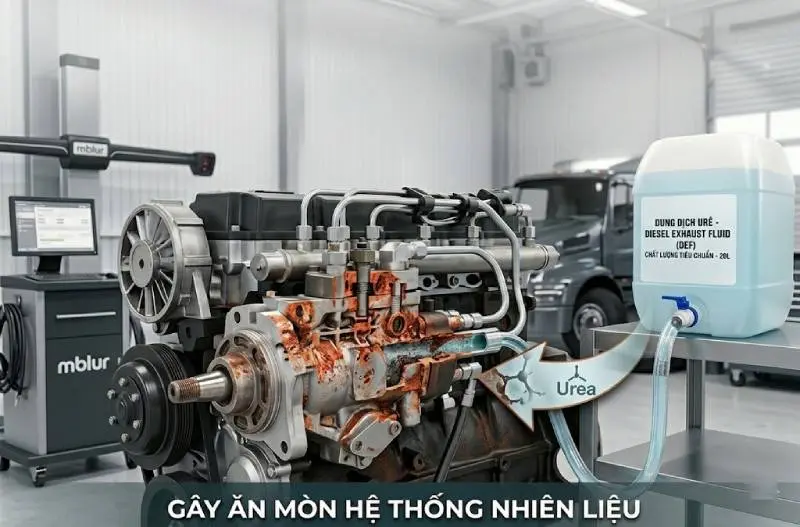
AdBlue consists of Urea and purified water. When entering the diesel fuel system, it changes the internal environment, causing corrosion of metal components such as the fuel pump, lines, and injectors. If not handled promptly, the extent of damage will escalate rapidly.
Clogs fuel injectors and fuel filter
When AdBlue is drawn into the fuel system, it can form crystalline deposits during operation. These deposits easily stick to the fuel injectors and fuel filter, reducing accurate fuel injection capability and causing the engine to run unevenly or shudder.
Causes damage to the fuel pump
Diesel fuel pumps are designed to operate with fuel that has lubricating properties. AdBlue has no lubricating properties, so entering the system causes the pump to run dry, easily leading to rapid wear and complete failure if the vehicle continues to run.
Affects the entire engine system
If the vehicle continues to start or operate, AdBlue will spread deep into the entire fuel system. Repair costs will then increase significantly, potentially requiring the replacement of multiple components such as injectors, high-pressure pumps, and fuel filters, causing severe operational disruptions.
2. How to handle accidentally putting AdBlue into the diesel tank
When discovering accidentally putting AdBlue into the diesel tank, the most important thing is to act quickly and correctly. Just one wrong move can cause severe damage to the fuel system.
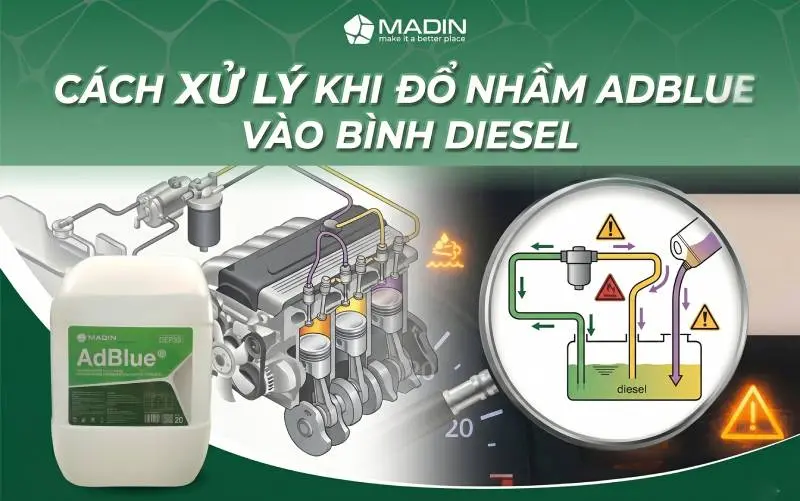
Immediately stop starting the vehicle
Upon discovering that AdBlue has been mistakenly put into the diesel tank, the first and mandatory step is to not start the vehicle under any circumstances. If the engine has not been started, keep it strictly as it is. If the engine was started for a short time, turn it off immediately. The reason is that when the engine operates, the fuel pump will draw AdBlue deep into the system, spreading it to the injectors, high-pressure pump, and fuel lines. Just a single start can cause repair costs to increase many times over compared to handling it properly from the beginning.
Contact rescue services and take the vehicle to a garage
After ensuring the vehicle is not started, the next step is to call rescue services to tow the vehicle to a garage or service center. You should not drive the vehicle yourself even for a short distance because the risk of damaging the fuel system is very high. Moving the vehicle must be done using a specialized tow truck to avoid activating the fuel pump. At a reputable garage, technicians will have all the necessary equipment to safely handle the mixture of AdBlue and diesel, preventing it from spreading to other components.
Drain all fuel from the tank
Once the vehicle is in the workshop, the first step in the technical process is to drain all fuel from the tank. The mixture of diesel and AdBlue will be completely sucked out to ensure no residue remains inside. This is an important step because even if a small amount of AdBlue remains, adding new fuel will continue to contaminate the system. The draining process must be performed using specialized equipment to ensure it is completely clean and does not damage the tank.
Flush the fuel system
After draining the tank, the entire fuel system will be flushed. This process includes cleaning the fuel lines, fuel filter, and related chambers. The goal is to completely remove urea residue and impurities that may have adhered during the AdBlue contamination. Flushing must be carried out using proper techniques because the diesel system is very susceptible to damage if any incompatible solution remains.
Inspecting and replacing damaged components
After cleaning the system, technicians will inspect key components such as the fuel pump, fuel injectors, and fuel filter. If signs of corrosion, clogging, or performance degradation are detected, these parts will be replaced. This step ensures that the fuel system operates smoothly when putting the vehicle back into service. For vehicles severely contaminated with AdBlue, replacement may be mandatory to prevent the risk of recurring issues.
3. Mistakes to avoid when accidentally pouring AdBlue into a diesel tank
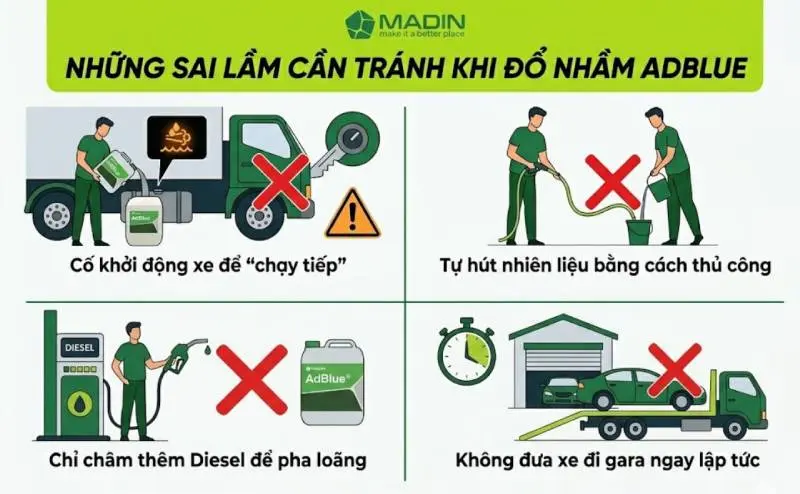
When encountering the issue of accidentally pouring AdBlue into a diesel tank, many people handle it incorrectly, making the situation worse. Below are common mistakes that must be strictly avoided:
- Attempting to start the car to “keep driving”: This is the most serious mistake, causing AdBlue to spread quickly throughout the entire fuel system and result in severe damage.
- Manually siphoning fuel incorrectly: This can easily damage the fuel lines, fail to completely remove AdBlue, and potentially contaminate the system further.
- Simply adding more diesel to dilute it: This method does not resolve the AdBlue issue and increases the risk of crystallization within the fuel system.
- Failing to take the vehicle to a garage immediately: Delays will cause AdBlue to penetrate deep into the pump and injectors, significantly increasing repair costs.
Handling it correctly right from the start is the decisive factor in protecting the engine and reducing damage.
4. AdBlue® By Madin – Safe and high-quality solution for diesel vehicles

AdBlue® By Madin is an exhaust treatment fluid that meets VDA (Germany) standards, used for Euro 4, Euro 5, and Euro 6 diesel vehicles. The product helps the SCR system operate stably and effectively reduces NOx emissions.
Key benefits of AdBlue® By Madin:
- Meets ISO 22241 and VDA standards, ensuring high purity
- Reduces NOx emissions by up to 90%, helping meet vehicle inspection standards
- Helps the SCR system operate stably, minimizing injector errors
- Reduces fuel consumption by approximately 5% under suitable operating conditions
- Suitable for various vehicle types: trucks, buses, diesel passenger cars
- Diverse packaging options: 10L, 20L, 200L, 1000L, and bulk tanks
AdBlue® By Madin is a solution that helps vehicles operate safely, reduces technical risks, and ensures long-term performance for the exhaust treatment system.
Conclusion
In the event of an incident, knowing how to handle accidentally pouring AdBlue into the diesel tank helps users avoid serious damage to the fuel pump system, fuel injectors, and fuel filters. The most important rule is not to start the engine and to take the vehicle to a reputable garage for proper technical handling, such as draining, flushing, and inspecting the entire system. Handling it correctly from the start will significantly reduce repair costs and operational risks. Contact Madin for advice on standard-compliant, safe AdBlue products for diesel vehicles.
CÔNG TY TNHH MTV MADIN
- Address: 13 – Le Ngung, Tran Hung Dao Ward, Quang Ngai City, Quang Ngai Province, Vietnam.
- Hotline: +84 888 718 778
Factory:
Northern Region
- Address: Road 206, Pho Noi A Industrial Zone (Thanh Ha Warehouse), Lac Hong Commune, Van Lam District, Hung Yen, Vietnam.
- Hotline: +84 857 529 222
Southern Region
- Address: 180 Thong Nhat, Binh Thang, Di An City, Binh Duong, Vietnam
- Hotline: +84 888 718 778
Warehouse:
- Hanoi: 706 Nguyen Khoai – Thanh Tri – Hoang Mai – Hanoi
- Nghe An: Dien Hong Industrial Zone – Dien Chau – Nghe An
- Da Nang: 303 Le Dai Hanh – Hoa Phat – Cam Le – Da Nang
- Quang Ngai: 13 Le Ngung, Tran Hung Dao Ward, Quang Ngai City, Quang Ngai Province