


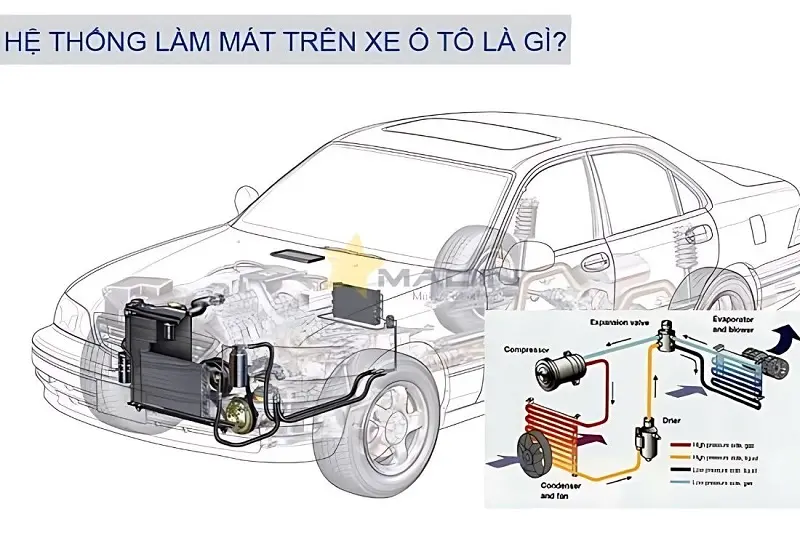
During the operation, the car engine always generates a large amount of heat due to the continuous combustion of fuel in the combustion chamber. If the temperature is not effectively controlled, the metal parts can quickly degrade the durability and affect the performance of the entire system. Therefore, the cooling system plays an important role in maintaining a stable operating state for the engine. In particular, the water cooling system is commonly used in many cars today. Follow the article below of Madin to understand better Which engine is water-cooled?.
1. What is a car water cooling system?
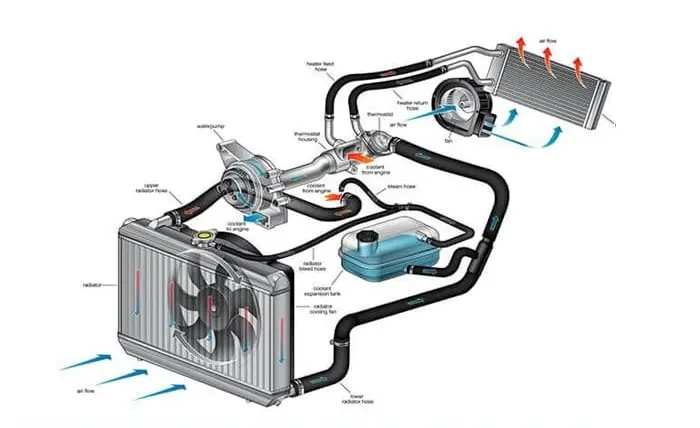
Car water cooling system is a system that uses a cooling solution through the engine parts to control the temperature generated during fuel combustion. During operation, the combustion chamber always generates a large amount of heat, if not controlled in time, it will reduce the durability of the material, affecting the working performance and life of the engine. Therefore, the cooling system plays the role of maintaining a stable working temperature within the allowable limit.
Compared with the air-cooled system, the water-cooled system has more effective and stable temperature control, so it is commonly used on most cars today. The coolant is continuously recirculated between the engine and the water tank through the water pump, combined with the regulation of the thermostat valve and the cooling fan to ensure the efficient heat exchange process. As a result, the engine can operate stably in many different traffic conditions and environments.
2. Which motor is water-cooled?
Most of the engines used in cars today are equipped with water-cooled systems to ensure stable temperature control during operation. Here are some common engine groups using water-cooled systems.
Car petrol engine
Gasoline engine is a type of engine that is commonly used on passenger cars today and most of them use water-cooled systems. During the combustion of a mixture of fuel and air, the temperature in the combustion chamber increases rapidly, so a circulating coolant is required to maintain a stable temperature. The water-cooled system helps to control the working temperature of the gasoline engine in urban operating conditions or long distance travel, while helping to reduce excessive thermal expansion of metal parts.
diesel engine
Diesel engines usually work at higher compression pressure than gasoline engines, so the amount of heat generated during operation is also larger. Therefore, the water-cooled system is used to ensure effective and stable temperature control. Maintaining the right temperature helps the diesel engine to operate more durable under heavy load conditions or operate continuously for a long time.
truck engine and service car
Trucks and service vehicles often have to operate with large loads and high operating frequency, so the cooling system is required for stable performance. The water-cooled system helps maintain the right operating temperature for the engine in conditions of continuous operation over long distances or in high temperature environments. As a result, the engine can ensure operating efficiency and limit the risk of overheating during use.
Some specialized engines and vehicles
In addition to civil cars, many types of construction machines and specialized vehicles also use water-cooled engines to meet the requirements of working in harsh environments. In operating conditions with high load or high ambient temperature, the water cooling system ensures stable temperature control and supports the engine to operate effectively for a long time.
3. Structure of water cooling system on cars
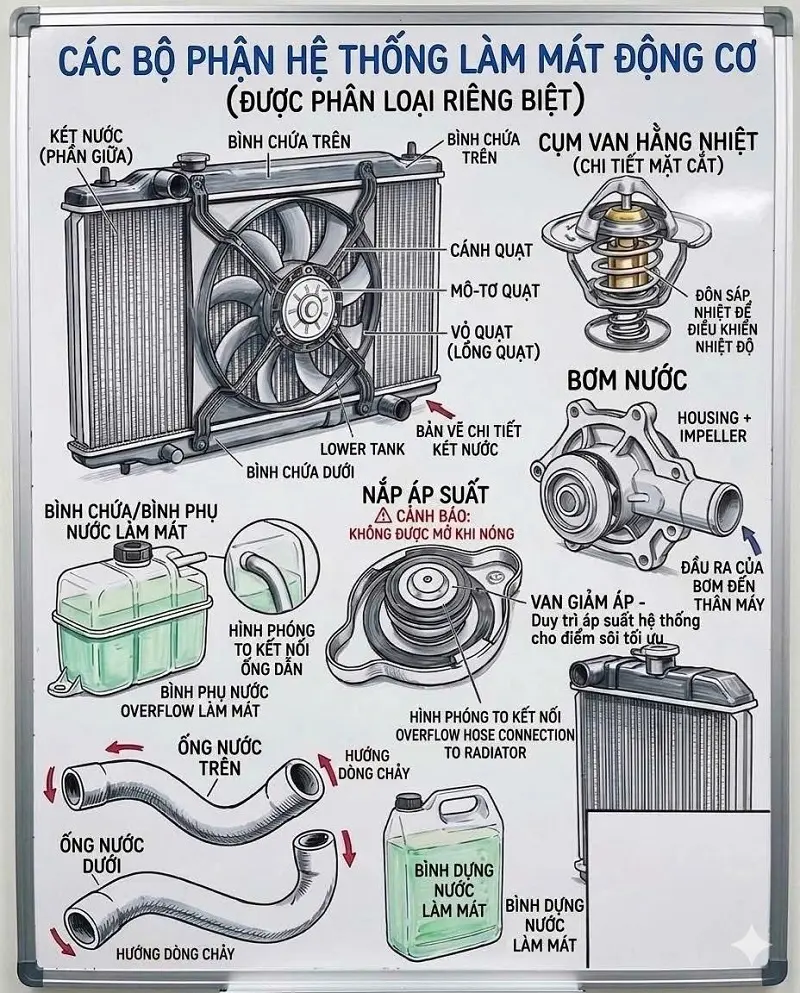
The car’s water-cooling system is composed of many parts that work together to ensure that the cooling solution circulation process is continuous and efficient. Below are the main parts commonly found in the water cooling system in the car.
Radiator (Radiator)
The water tank is the part responsible for exchanging heat between the coolant and the outside air environment. The structure of the water tank usually consists of many small pipes combined with metal heat sinks to help increase the area of contact with the air. When the hot coolant from the engine enters the water tank, the heat is transferred to the environment through the heat sinks, helping to reduce the solution temperature before returning to the engine to continue the cooling cycle.
Water tank cap
The lid of the water tank is responsible for maintaining a stable pressure in the cooling system to improve the heat exchange efficiency and limit the phenomenon of boiling coolant. Inside the water tank cover is usually designed with two types of valves including pressure valve and vacuum valve. The pressure valve helps to regulate the amount of solution transferred to the auxiliary vessel when the pressure in the system increases, while the vacuum valve has the function of sucking the solution from the auxiliary tank back to the water tank when the pressure drops to a low level.
thermostat valve
The thermostat is the part that controls the working temperature of the engine by regulating the flow of the coolant between the engine and the water tank. When the new engine starts and the temperature is low, the thermostat valve will close so that the cooling solution has not passed through the water tank to help the engine quickly reach the standard working temperature. When the temperature rises between 75 and 102°C, the valve opens to the solution through the water tank and starts the cooling process.
Water pump
The water pump is responsible for creating a circulation flow for the coolant in the entire system. This unit is usually driven according to the rotation speed of the engine and operates on the principle of centrifugation to move the solution through the pipes, body and water tank. As the engine speed increases, the flow of circulating solution also increases to meet the cooling needs of high load operation.
Cooling fan
The cooling fan is responsible for increasing the flow of air through the water tank to improve the heat exchange efficiency between the coolant and the external environment. In the condition that the vehicle moves slowly or stops, the cooling fan plays an important role in maintaining the heat dissipation performance for the system. As a result, the coolant temperature is still controlled stably even when the natural air flow through the water tank is reduced.
4. Working principle of water cooling system
The water-cooled system operates on the principle of recirculating the coolant through the parts of the engine to absorb and release heat continuously during operation. When the engine is in operation, the coolant is pumped with water to circulate through the body and cylinder cover to absorb the heat generated by the fuel combustion process.
After heat absorption, the hot coolant will move to the water tank through the pipes. Here, the heat is transferred to the environment thanks to the support of heat sinks and air flow through the water tank. As the solution temperature drops, the solution continues to return to the engine to perform the next cooling cycle.
In this process, the thermostat valve plays a role in regulating the flow of solution between the engine and the water tank to maintain a stable working temperature. At the same time, the lid of the water tank helps to control the system pressure to improve the cooling efficiency and limit the phenomenon of fluid boiling during operation.
5. Madin – Quality Madin Coolant Car Engine Coolant Supplier
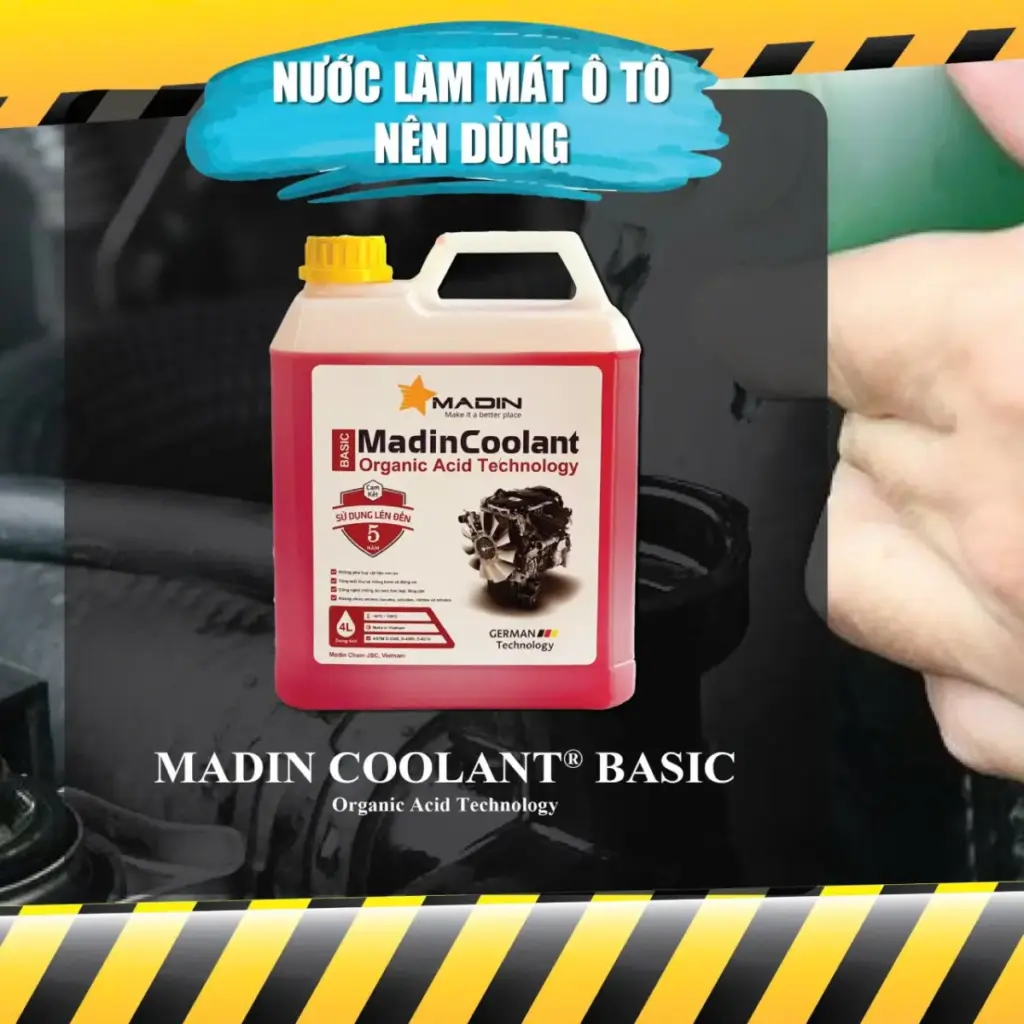
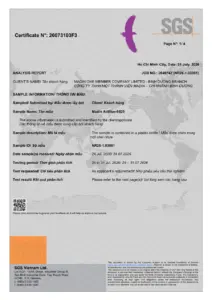
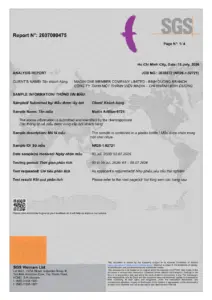
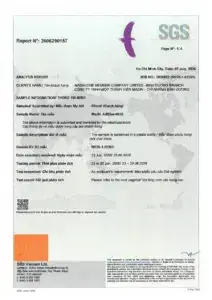
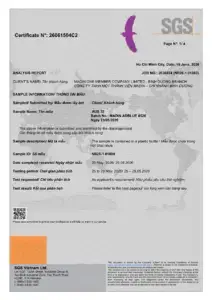
Madin is a supplier of Madin Coolant car engine coolant water solution chosen by many garages and spare parts dealers during the maintenance of the cooling system. The product is researched according to Organic Acid Technology (OAT) technology to support increased resistance to metal corrosion and limit the formation of residue in the cooling system after a long time of use.
In addition to the technology factor, the Madin Coolant coolant is quality controlled according to technical standards such as ASTM and JIS, making the product suitable for a variety of gasoline, diesel engines and vehicles operating in different conditions. Maintaining stable quality between production batches is also an important factor to help the product meet the actual use requirements in the periodic maintenance process.
Thanks to the wide distribution system and stable supply, Madin is becoming one of the units that many customers refer to when choosing the right coolant solution for the car engine cooling system.
Contact information
MADIN COMPANY LIMITED
- Hanoi warehouse: 756B Nguyen Khoai – Thanh Tri – Hoang Mai – Hanoi
- Hotline: 0886634634
- Email: [email protected]
- Factory address: Road 206 Pho Noi A Industrial Park, Van Lam, Hung Yen
Epilogue
The understanding Which engine is water-cooled? Help users be more proactive in the process of checking, maintaining and replacing periodic coolant for the vehicle. When the cooling system is maintained in accordance with technical standards, the ability to control the engine temperature will be more stable under many different operating conditions. Besides, choosing the right coolant is also an important factor contributing to the protection of the water tank and related details. OAT DO technology cooling water products Madin Development is currently being consulted by many garages during the maintenance of the engine cooling system.