


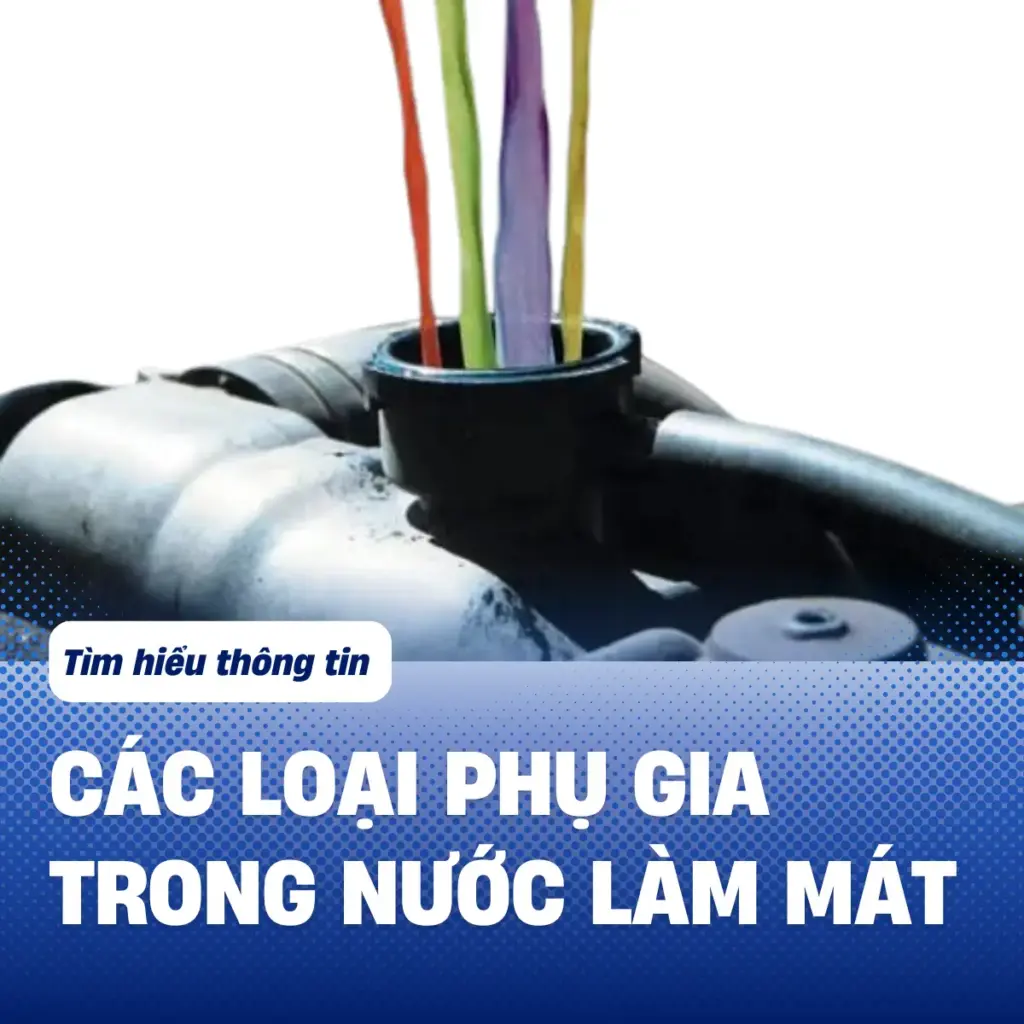
Cooling water plays an important role in protecting the engine. In addition to water and coolant, many types of additives help optimize system performance. Let’s learn with Madin the popular additives and when to use.
Antifreeze and anti-boiling agent in cooling water
Antifreeze in the coolant keeps it from freezing at low temperatures. When the ambient temperature is too low, the water can solidify, causing damage to the engine.
The main component of the anticoagulant is ethylene glycol or propylene glycol. They help reduce the freezing point to -30°C or less. At the same time, this is also an ingredient that helps increase boiling points, helping the system operate stably at high temperatures.
Some common anticoagulants:
- Ethylene glycol: Highly effective but toxic, need to be handled carefully.
- Propylene Glycol: Less toxic, safer but more expensive.
Note when using anticoagulants:
- Do not mix water in the anticoagulant solution because it reduces the effectiveness.
- Use the correct ratio according to the manufacturer’s instructions.
- Check periodically to make sure the water does not lose its effect.
Anti-corrosion agent in cooling system
The cooling system has many metal parts such as aluminum, copper and iron. Over time, these metals can become corroded, causing a coolant leak. Therefore, the anti-corrosion agent is responsible for creating a protective film on the metal surface. This membrane helps to minimize the impact of water and chemicals on the engine.
Some common anti-corrosion agents:
- Silicate: Forms quickly but easily accumulates residue.
- Phosphate: Highly effective but can react with hard water.
- Organic Acid Technology (OAT): new technology, good protection, long service life.
Note when using anti-corrosion:
- Do not mix varieties with different technologies.
- Check the system periodically to detect early signs of corrosion.
- Replace the cooling water at the right cycle to ensure the protection effect.
Should you use a water tank cleaning additive and cooling system?
After a long time of use, dirt can accumulate in water tanks and pipes. This reduces heat dissipation performance, even causing system blockage. The cleaning additive helps to remove dirt and rust in the cooling system. However, the use needs to be properly to avoid affecting the engine.
Benefits of cleaning additives:
- Removes dirt and rust in the water tank and pipes.
- Helps better circulation, increasing cooling efficiency.
- Prevent clogging, protect water pump and radiator.
Note when using cleaning additives:
- Use only when there are signs of congestion or decreased cooling performance.
- Use the right additive suitable for the current cooling water.
- After cleaning, it is necessary to thoroughly rinse the system before adding new water.
When to add additives and important notes?
The addition should be based on the actual condition of the cooling system, so the car owner can consider considering the condition of the vehicle.
When to add additives:
- When the coolant is discolored, there is dirt or signs of leakage.
- When the engine is overheated or the cooling system is not efficient.
- When changing new water to increase engine life.
Important notes:
- Choose the right type of additive for the current cooling water.
- Do not abuse additives because it can adversely affect the system.
- Check the system periodically to ensure stable operation.
The coolant water additive helps protect the engine from freezing, overheating and corrosion. However, the use of the right type and the right time to achieve the highest efficiency. Checking and maintaining the cooling system periodically is the best way to extend the engine life. Immediately contact hotline 0886.634.634 or visit the website www.adblue.com.vn To learn the product.