


In operating Euro 4-6 diesel vehicles, the SCR system using AdBlue solution is a mandatory requirement to control NOx emissions. However, many drivers do not monitor the fluid level, causing dashboard warnings to appear when AdBlue is about to run out. If not recognized early, the vehicle may experience operational limits and journey disruptions. Understanding the signs of running low on AdBlue and how to handle it helps vehicle owners proactively perform maintenance, reducing technical risks and costs during actual vehicle usage.
1. The role of AdBlue in diesel vehicles
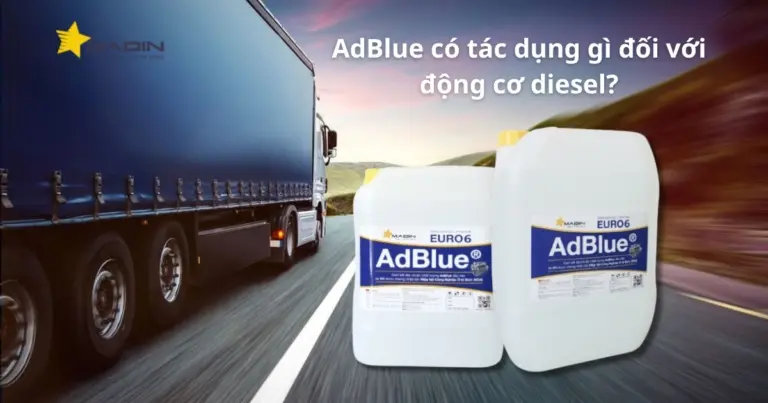
AdBlue is a mandatory exhaust treatment fluid for diesel vehicles meeting Euro 4, Euro 5, and Euro 6 standards. In operational reality, it is not an optional additive but a part of the SCR system that helps the vehicle operate according to emission standards and avoid technical errors.
- Reduce NOx emissions: AdBlue participates in the reaction inside the SCR unit to convert NOx into nitrogen gas and water vapor, making exhaust gases cleaner.
- Help vehicles meet inspection standards: If AdBlue is lacking, the vehicle may fail to meet mandatory emission standards.
- Protect the engine system: Maintain stable operation of the Urea injector and SCR catalyst unit, avoiding costly damages.
- Optimize operational performance: When the SCR system operates properly, the engine burns fuel more efficiently and runs more stably.
- Support long-term operation: Reduce deposit accumulation and minimize emission faults during vehicle use.
2. Signs of running low on AdBlue
When AdBlue is running low, diesel vehicles will start issuing multiple warnings so the driver can take timely action. Early recognition helps avoid operation restrictions or being unable to restart the vehicle.
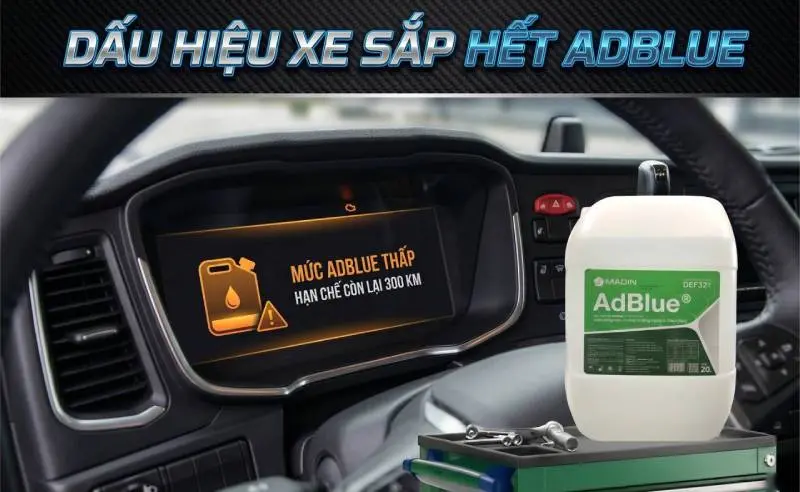
AdBlue warning light illuminated on dashboard
When the AdBlue level is low, the warning light on the dashboard will illuminate. The icon is usually a fluid tank with a droplet or the DEF/UREA symbol. This is the first and most easily recognizable sign during operation. At this stage, the vehicle still operates normally, but the system has recorded that the fluid level is insufficient to maintain long-term emissions treatment. If you continue driving without topping up, further warnings will appear.
“Refill AdBlue / Add DEF” message
After the warning light appears, the central display will show a message requesting an AdBlue refill. Some vehicle models also display the remaining distance in kilometers before operation is restricted. This is a clearer warning level, indicating that the vehicle only has enough fluid for a short distance. If ignored, the ECU system will begin activating protection mode.
Vehicle speed restricted
When AdBlue is nearly empty or not replenished in time, the vehicle’s speed will be restricted, usually within 20-50 km/h depending on the model. At this point, the engine still runs but experiences a noticeable loss of power, making it difficult to climb slopes, haul cargo, or drive long distances. This is a mandatory mechanism to force users to refill AdBlue immediately.
Unable to restart the vehicle
If AdBlue reaches level 0, many vehicle models will not allow restarting after turning off the engine. This is the final limit of the SCR system to ensure the vehicle does not operate without exhaust treatment. This situation usually interrupts the journey and forces an immediate AdBlue top-up on the spot to continue use.
Exhaust odor stronger than normal
When the SCR system stops working due to a lack of AdBlue, exhaust gases are no longer neutralized of NOx. At this point, the driver or anyone standing near the exhaust pipe will clearly notice a stronger exhaust odor than normal. This is a practical sign that the exhaust treatment system is interrupted and needs immediate inspection.
3. What to do when the vehicle alerts out of AdBlue
When the vehicle starts warning that it is out of AdBlue, proper handling is key to preventing the vehicle from being restricted or unable to continue the journey. Users should follow the steps below.
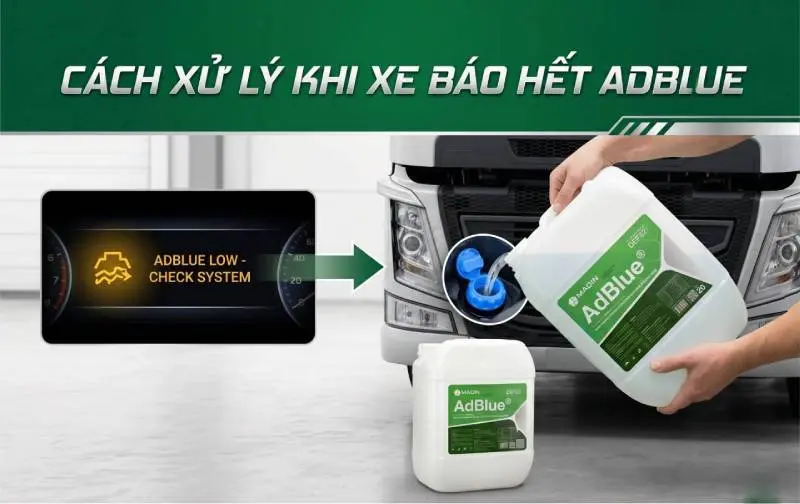
Top up with standard-compliant AdBlue
The first thing to do is to add AdBlue that meets technical standards (ISO 22241 or VDA). This is a mandatory requirement to ensure the SCR system operates stably. Never use water or substitute fluids, as they can damage injectors and the exhaust treatment system.
Refill in the correct location and follow the right process
AdBlue must be poured into a separate dedicated tank, not confused with the diesel fuel tank. When refilling, avoid letting dirt or impurities mix in, as the SCR system is very sensitive to fluid purity. After topping up sufficiently, close the cap tightly to ensure it does not evaporate or become contaminated.
Restart the vehicle system
After refilling, some vehicle models need to be restarted so that the ECU can update the new AdBlue level. Once the system receives enough fluid, the warning on the dashboard will automatically turn off and the vehicle will return to normal operating status. If the warning persists, recheck the fluid level or the SCR sensor system.
4. AdBlue® By Madin – VDA-certified (Germany) diesel engine exhaust fluid
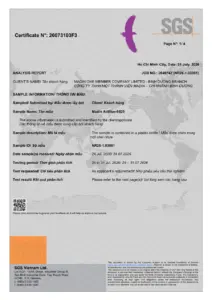
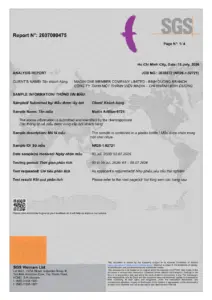
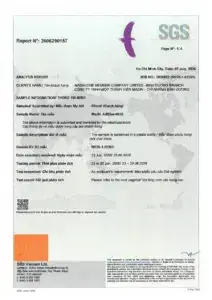
AdBlue® By Madin is a diesel exhaust fluid manufactured according to VDA standards (Germany), meeting the strict requirements of SCR systems on Euro 4, Euro 5, and Euro 6 vehicles.
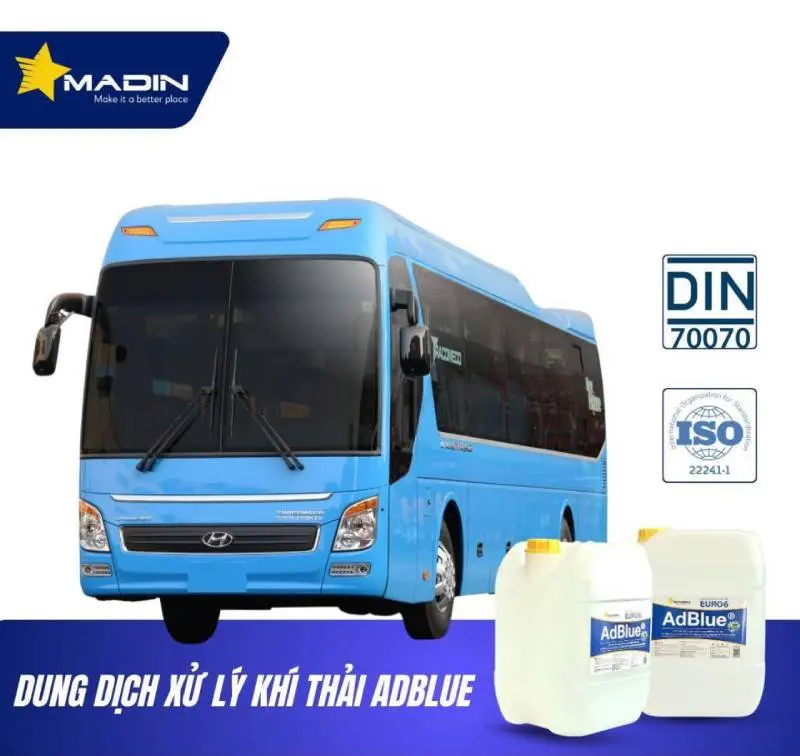
The product is designed to ensure stable operation of the exhaust system and minimize the risk of errors during operation.
- Meets VDA and ISO 22241 standards, ensuring high purity
- Reduces NOx emissions by up to 90%, helping vehicles meet inspection standards
- Helps the SCR system operate stably, limiting injector faults
- Reduces fuel consumption by about 5% under suitable operating conditions
- Suitable for many vehicle types: trucks, buses, and modern diesel passenger cars
- Diverse packaging options: 10L, 20L, 200L, 1000L, and bulk containers
- Long shelf life, stable when stored under proper temperature conditions
AdBlue® By Madin is a solution that helps vehicles operate according to technical standards, reducing risks and ensuring long-term efficiency for the SCR system.
Conclusion
In practical diesel vehicle operation, early recognition of signs that a vehicle is running low on AdBlue and knowing how to handle it helps drivers avoid power limitation or engine start prevention, ensuring uninterrupted journeys and minimizing technical risks. The solution is to periodically monitor AdBlue levels, use standard-compliant fluid, and top up promptly to keep the SCR system operating stably, reducing the risk of damage and emissions errors. Contact Madin for immediate consultation.
CÔNG TY TNHH MTV MADIN
- Address: 13 Le Ngung, Tran Hung Dao Ward, Quang Ngai City, Quang Ngai Province, Vietnam.
- Hotline: +84 888 718 778
Factory:
Northern Region
- Address: Road 206, Pho Noi A Industrial Zone (Thanh Ha Warehouse), Lac Hong Commune, Van Lam District, Hung Yen, Vietnam.
- Hotline: +84 857 529 222
Southern Region
- Address: 180 Thong Nhat, Binh Thang, Di An City, Binh Duong, Vietnam
- Hotline: +84 888 718 778
Warehouse:
- Hanoi: 706 Nguyen Khoai – Thanh Tri – Hoang Mai – Hanoi
- Nghe An: Dien Hong Industrial Zone – Dien Chau – Nghe An
- Da Nang: 303 Le Dai Hanh – Hoa Phat – Cam Le – Da Nang
- Quang Ngai: 13 Le Ngung, Tran Hung Dao Ward, Quang Ngai City, Quang Ngai Province