


During operation, the car engine always generates a large amount of heat due to the continuous burning of fuel in the combustion chamber. If not effectively controlled, high temperatures can directly affect the performance and durability of mechanical parts. Therefore, equipping a suitable thermal control system is a mandatory requirement in modern vehicle design. To understand this mechanism, the following content will focus on clarifying Car cooling system: Structure, principle of operation from a technical perspective and practical use.
1. What is the car cooling system?
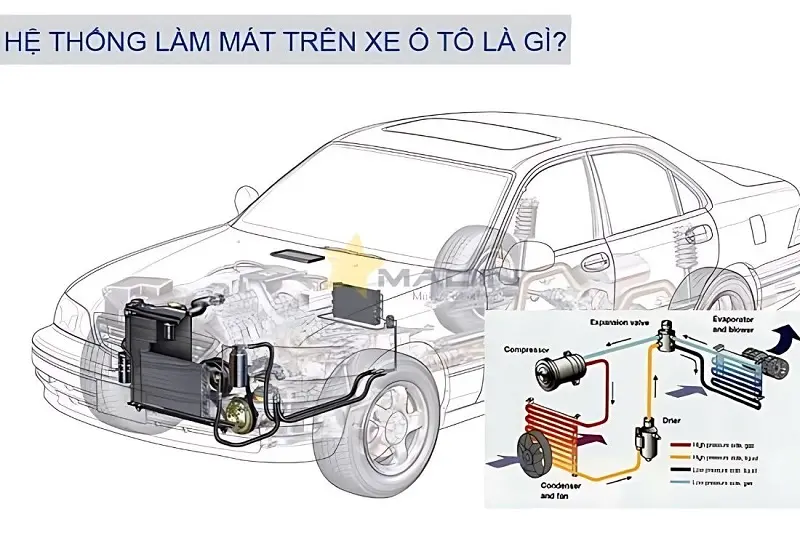
Car cooling system Is a combination of parts that control and maintain the working temperature of the engine within the allowable limit. During the combustion of fuel, the engine generates a large amount of heat; If the heat is not dissipated in time, the mechanical details can be excessively expanded, reducing performance and increasing the risk of damage.
The cooling system helps to absorb heat from the engine and transmit it to the outside environment through different mechanisms, depending on the design of each vehicle. As a result, the engine always operates in a stable state, limiting overheating and maintaining operating efficiency.
Besides the heat dissipation function, this system also contributes to protecting metal parts from corrosion and supports smooth operation for a long time. Ensuring the efficient cooling system works is an important factor in increasing engine life and reducing maintenance costs.
2. Classification of car cooling systems
Car cooling system Currently divided into two main types: air-cooled and water-cooled. Each type has different structural characteristics and operating principles, suitable for each engine use and design conditions.
2.1. Air cooling system
The air-cooled system has a relatively simple structure, mainly consisting of the heat sinks arranged on the engine body and the fan to support air circulation. The radiators are responsible for absorbing heat from the engine, while the fan will bring air from the outside environment to reduce the temperature of these surfaces.
The principle of operation of the system is based on direct heat transfer from the engine to the air. When the engine is operating, the heat is led to the radiators and is swept away by the air. The blower can be operated by the motor or using a separate power source.
The advantage of this system is that the structure is compact, does not use cooling solution, so there is no leakage. In addition, the system can work well in cold environments and is independent of the water source. However, the disadvantage is that the cooling efficiency is not high, especially with large power motors, and often generates noise during operation.
2.2. Water cooling system
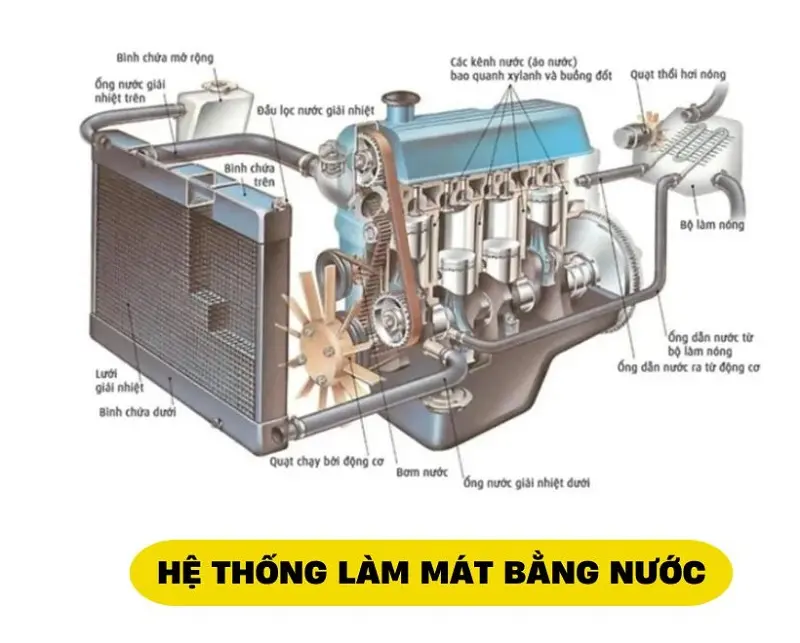
Water-cooled systems are commonly used on most modern cars thanks to more effective temperature control. Compared with air-cooled, this system has a more complex structure but provides stable heat dissipation performance in many operating conditions.
The reason this system is widely used is because of the good heat absorption and transfer capacity of the coolant, which helps to maintain the engine temperature at a stable level. Outstanding specification is the ability to cool evenly, precise heat control and suitable for large-capacity motors or continuous operation.
Compared with the air-cooled system, the water cooling system is more efficient but requires periodic maintenance and quality control of the coolant.
Construction of a water cooling system in the car:
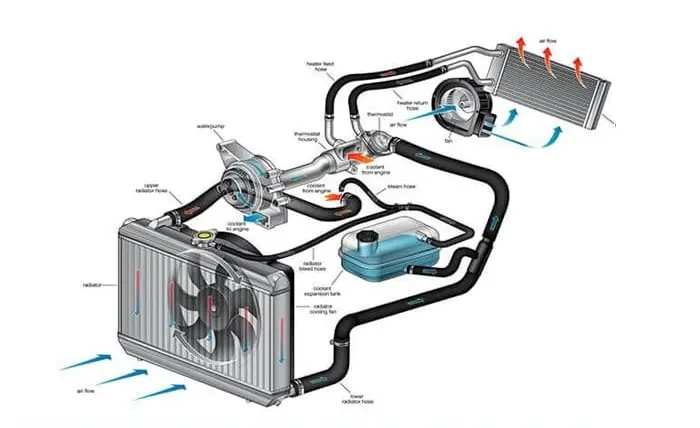
- Radiator (Radiator): The water tank is the main part that performs the heat dissipation function. The structure consists of small pipes and alternating aluminum foils, helping to increase the area of contact with the air and improve the cooling efficiency when the solution passes.
- Water tank cap: The water tank cover has a pressure regulator role in the system, including the pressure valve and the vacuum valve. The pressure valve helps release pressure when the temperature is high, while the vacuum valve supports the solution to suck the solution back when the pressure drops, ensuring the system works stably.
- thermostat valveThe thermostat valve controls the circulation of the cooling water between the engine and the water tank. When the engine has not reached the working temperature, the valve will close to retain heat. When the temperature rises to a certain level, the valve opens to allow the solution to circulate and perform the cooling process.
- Water pump: Water pump works on the principle of centrifugation, helping to circulate the solution throughout the system. As the engine accelerates, the pump is also more active, ensuring that the amount of cooling water provided is enough to meet the heat dissipation needs.
- Fan: The blower helps to increase the air flow through the water tank, thereby improving the heat dissipation efficiency. The cooling performance of the fan is usually dependent on the motor speed or is controlled by electronics.
3. Working principle of car cooling system
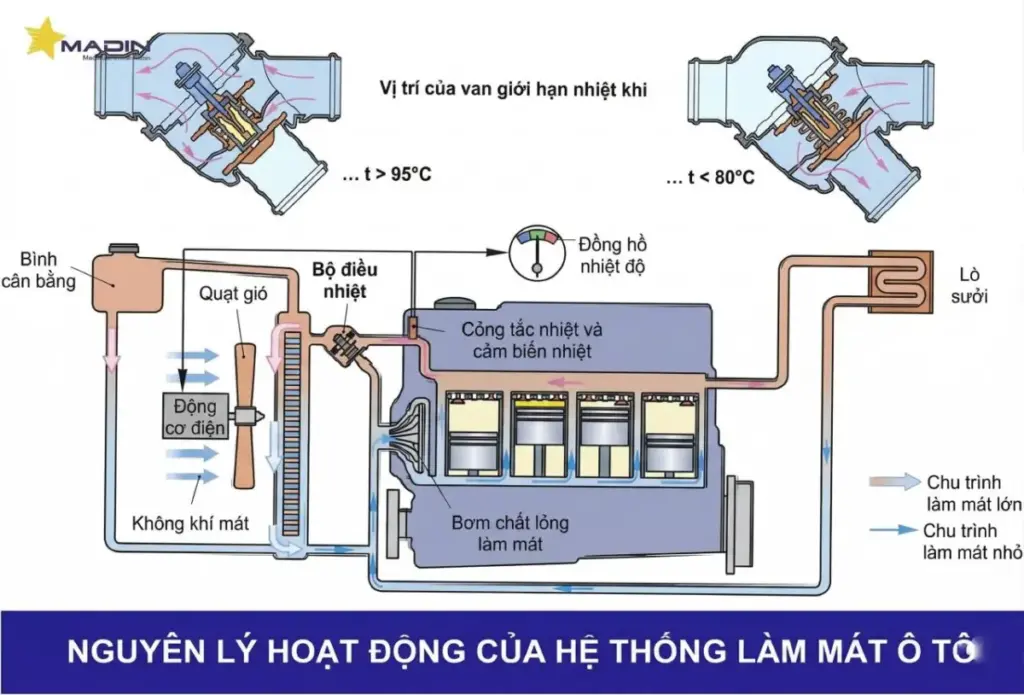
Car cooling system, especially the water-cooled type, operates on the principle of fluid circulation for continuous heat absorption and dissipation. When the engine is operating, the coolant is pumped from the water tank into the chambers inside the engine to absorb the heat generated by the fuel combustion process.
After heat absorption, the solution will move through the pipes to the water tank. Here, the heat is transferred to the medium through the heat sinks and the passing air flow, which can be supported by the blower. When the temperature drops, the coolant continues to be pumped back to the engine to repeat the cycle.
Thermosensive valve acts as a flow regulator, ensuring that the solution only circulates through the water tank when it reaches a certain temperature. At the same time, the system is also designed to be sealed and pressurized to improve the boiling point of the solution, helping to increase the cooling efficiency and avoid boiling during operation.
4. Madin provides car coolant Madin Coolant helps maintain stable cooling system
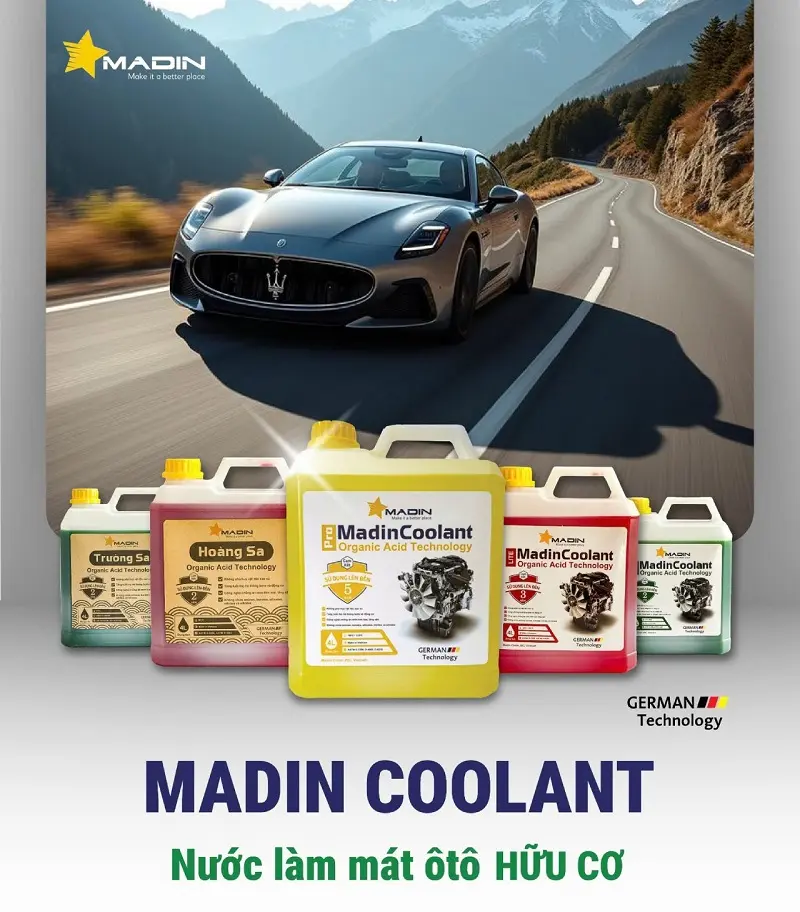
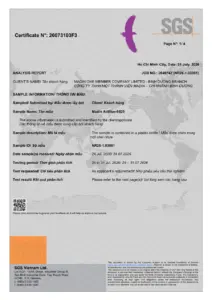
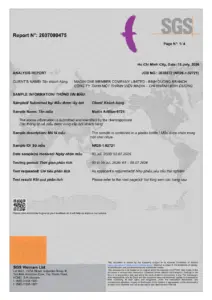
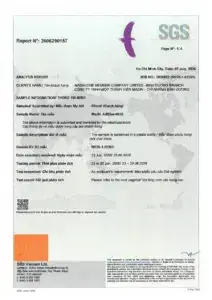
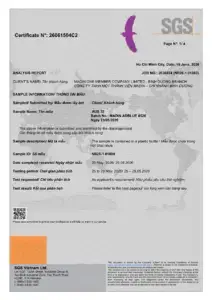
Madin is a supplier of technical solution solutions for cars, in which Madin Coolant coolant is developed to meet the stable operation requirements of the cooling system. The product applies Organic Acid Technology (OAT), which improves corrosion resistance and maintains cooling efficiency for a long time.
Madin Coolant has the ability to limit the formation of dirt in water tanks and pipes, thereby ensuring stable flow. At the same time, the product is designed to not contain components that easily affect the system, suitable for many types of engines such as gasoline, diesel and natural gas.
The use of standard coolant helps the system operate efficiently, reduce the risk of overheating and prolong the life of the engine. In addition, Madin also supports technical advice, helping users choose the right solution for the actual operating conditions of each vehicle.
Contact information
MADIN COMPANY LIMITED
- Hanoi warehouse: 756B Nguyen Khoai – Thanh Tri – Hoang Mai – Hanoi
- Hotline: 0886634634
- Email: [email protected]
- Factory address: Road 206 Pho Noi A Industrial Park, Van Lam, Hung Yen
Epilogue
Understanding the structure and working principle of Car cooling system Help users to be more proactive in checking, maintaining and detecting problems related to engine temperature early. Besides technical factors, choosing the right coolant also plays an important role in maintaining long-term operational efficiency. Solutions from Madin, especially the Madin Coolant Cooling Water flow, developed to meet the requirements of thermal stability and protection of the system in a variety of operating conditions.