


In the operating system of a car engine, coolant plays an important role in maintaining a stable temperature and ensuring long-term performance. In fact, coolants are not only different in composition but also classified according to production technology, protection and operating characteristics under each temperature condition. Today’s product lines are developed according to many different technical standards, suitable for each engine group. Therefore, it is important to understand the classification of Coolant for Automotive Engines 2026 is needed.
1. What is car coolant?
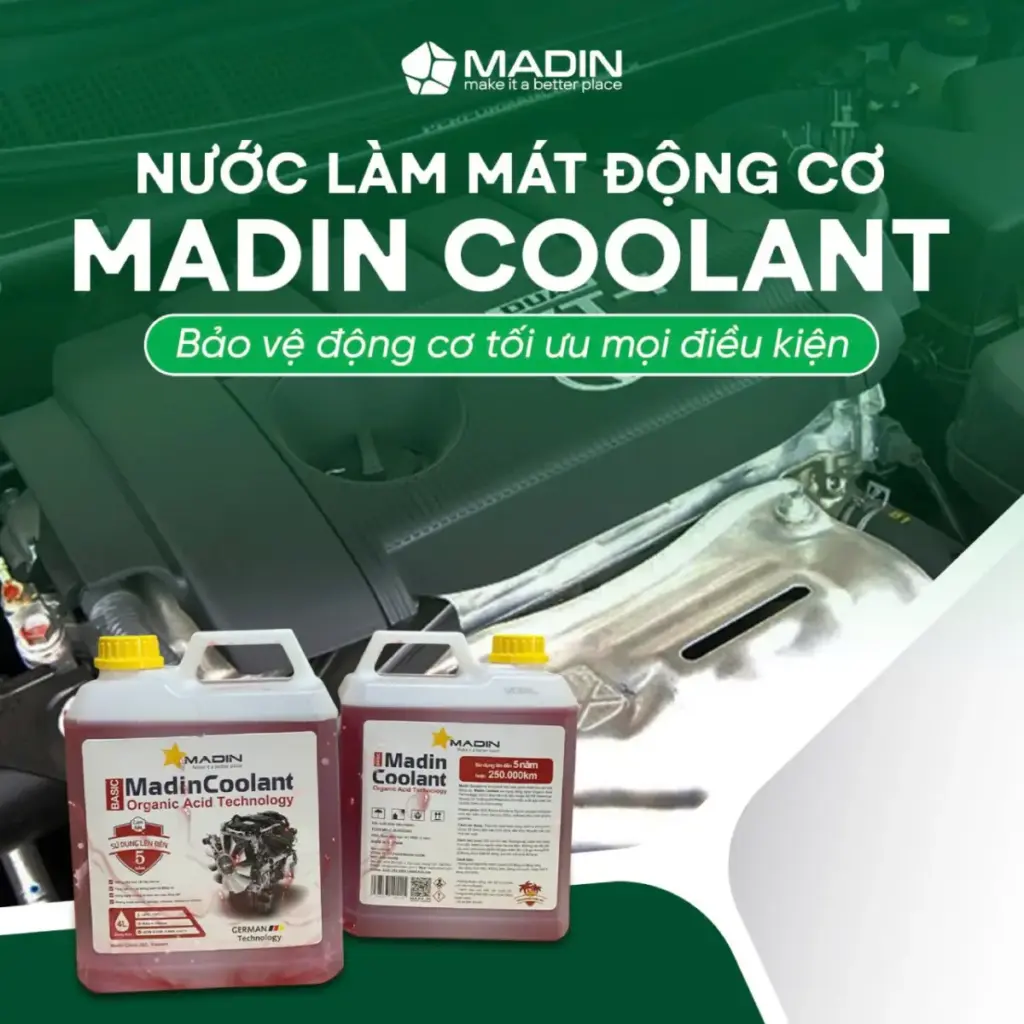
Automotive coolant is a specialized solution used in the engine’s cooling system to maintain a stable operating temperature during the vehicle’s operation. During fuel combustion, the engine generates a large amount of heat at parts such as cylinders, pistons, and combustion chambers. If left unchecked, elevated temperatures can reduce performance or cause damage to engine parts. The coolant is responsible for absorbing heat from the engine, then conducting the heat to the heat sink to release it into the environment. In addition to water and ethylene glycol, the solution also contains additives that help prevent corrosion, scaling, and stabilize performance. As a result, the car’s operating system is more stable and safer.
2. Uses of engine coolant products
Engine coolant plays an important role in ensuring stable operation and prolonging the life of the car engine system. This is one of the technical solutions that must be maintained to the right standards throughout the use of the vehicle.
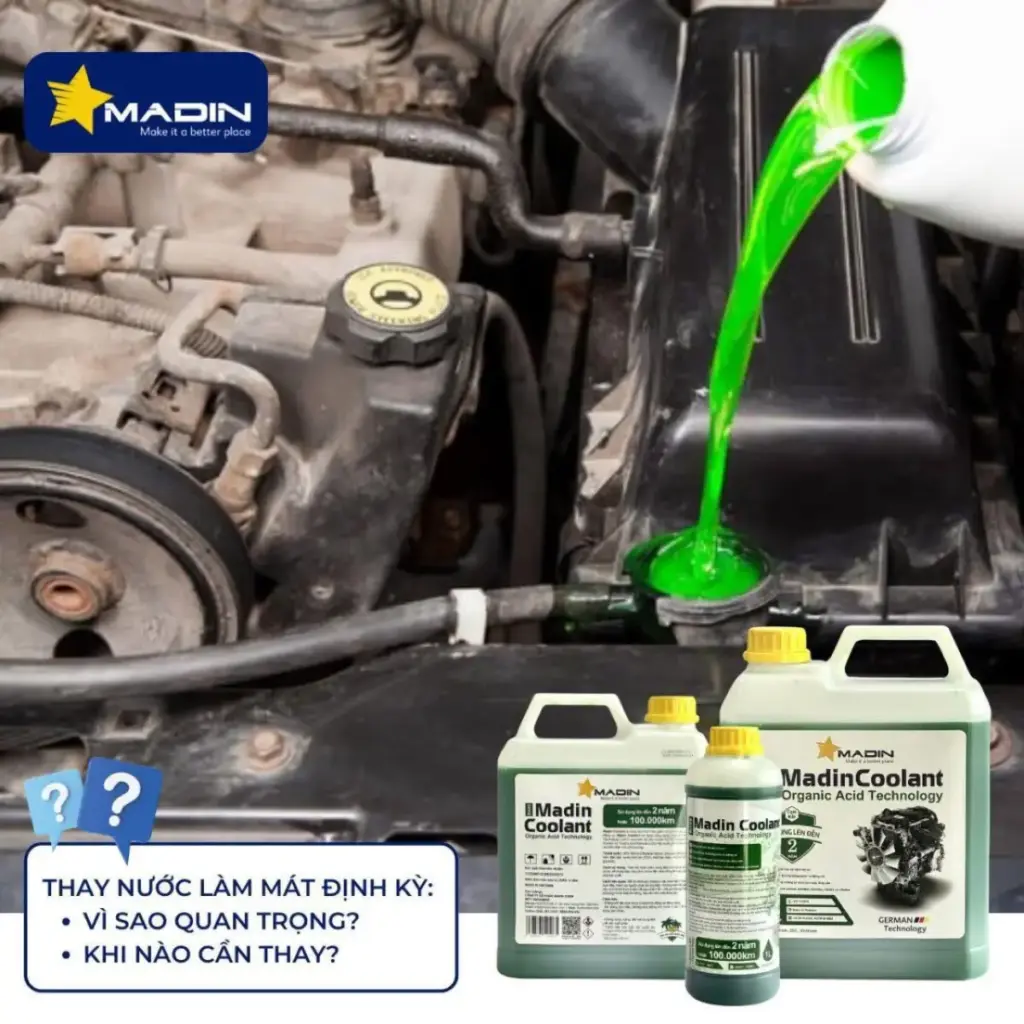
Reduces overheating when the motor operates at high loads
During operation, especially when the vehicle is traveling long distances or operating at high speeds, the engine generates a huge amount of heat. The coolant is able to absorb and transfer heat to the heat sink, helping to maintain a stable temperature. This limits overheating, avoids deterioration of engine performance or deformation of metal parts due to thermal expansion.
Anti-freezing cooling system in low-temperature environment
In cold weather, ordinary water can freeze and clog the cooling system. The coolant is supplemented with ethylene glycol to help lower the freezing point, ensuring a stable flow in all weather conditions. As a result, the engine can start and operate normally even in low-temperature environments.
Corrosion resistance to metal parts in the system
The cooling system consists of many metal parts such as aluminum, cast iron, and copper. During operation, the contact between temperature, water, and oxygen can cause corrosion. The coolant contains specialized additives that help create a protective layer on the metal surface, limiting oxidation and electrochemical corrosion, thereby extending the life of the system.
Limit scaling in pipes and water tanks
During long-term use, mineral deposits and impurities can form in the cooling system, causing piping clogging or reducing heat dissipation efficiency. High-quality coolant is designed to limit sediment formation, helping to maintain a steady flow and ensuring efficient heat exchange between the motor and the environment.
Maintain long-term stable vehicle performance
When the cooling system is working efficiently, the engine temperature is controlled within a safe threshold, helping the fuel combustion process to take place optimally. This not only helps the vehicle operate stably, but also reduces the wear and tear of machine parts, saves maintenance costs, and extends the overall life of the engine.
3. Classification of coolants for car engines 2026
Currently, car engine coolants are classified mainly based on production technology and chemical properties. Understanding each type helps users choose the right product suitable for each car model and operating conditions.
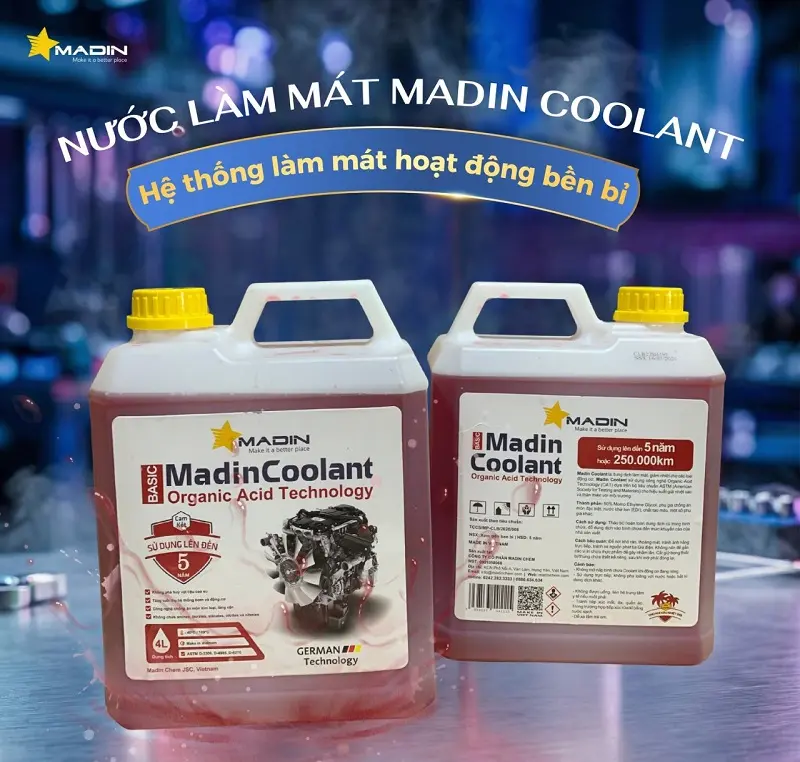
Coolant IAT (Inorganic Acid Technology)
IAT technology uses inorganic additives such as silicates, borates, and phosphates to create a protective film on metal surfaces. This film helps to prevent corrosion quickly as soon as the solution is introduced into the system. This is a coolant suitable for older vehicles or traditional cooling systems that use materials such as cast iron, iron or copper. However, the disadvantage of IAT is that it does not have a long lifespan, usually needs to be replaced after 2-3 years or about 40,000 km. In addition, the ability to build up deposits over time can reduce the efficiency of heat dissipation if not maintained periodically.
Coolant with OAT (Organic Acid Technology) technology
OAT uses organic acids to protect metal surfaces at points of risk of corrosion instead of coating the entire system like IAT. This helps reduce excess additives and limits the formation of deposits during use. OAT coolant is suitable for modern vehicles that use aluminum alloy in the engine. The advantage of OAT is a long service life, which can be up to 5 years or 150,000-250,000 km depending on operating conditions. However, this type of solution should not be mixed with IAT because it can cause a chemical reaction that reduces cooling efficiency.
Coolant with HOAT technology (Hybrid Organic Acid Technology)
HOAT is a hybrid technology between IAT and OAT, combining the fast protection of inorganic additives and the long-term durability of organic acids. As a result, HOAT provides a balance between protection speed and service life. This type of coolant is often used on modern or European vehicles with high technical requirements. HOAT helps to protect aluminum alloy parts, resist corrosion and limit scaling. The replacement cycle usually ranges from 3-5 years or about 150,000 km depending on the actual use conditions.
4. Madin – The supplier of quality Madin Coolant product line
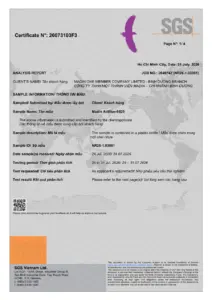
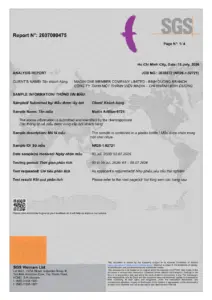
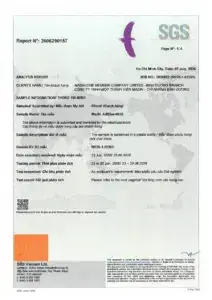
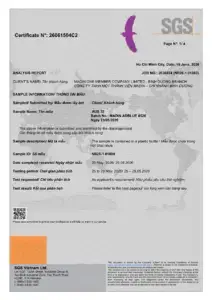
Madin is a research and manufacturer of Madin Coolant for automobile and motorcycle engine systems in Vietnam. The product is developed based on modern OAT technology, focusing on engine protection in actual operating conditions, while ensuring stable heat dissipation performance for a long time.
The Madin Coolant series is designed with many different product segments such as Pro, Basic, Lite and Base, suitable for each use needs and type of motor. The products are all aimed at effective temperature control, limiting metal corrosion and reducing the formation of deposits in the cooling system.
In addition to cooling, Madin Coolant also focuses on durability and stability when operating. The solution helps maintain the optimal operating state of the system, limiting damage due to overheating or sudden temperature changes. At the same time, the product is designed to be compatible with a wide range of metal materials common in modern engines.
With the orientation of product development according to technical standards and practical application, Madin brings suitable coolant solutions for many models, contributing to supporting users in maintaining and operating the engine in a more efficient and stable way.
Contact information
MADIN CO., LTD
- HN Warehouse: 756B Nguyen Khoai – Thanh Tri – Hoang Mai – Hanoi
- Hotline: 0886634634
- Email: [email protected]
- Factory Address: Street 206, Pho Noi A Industrial Park, Van Lam, Hung Yen
Conclusion
Understanding the classifications Coolant for Automotive Engines according to technologies such as IAT, OAT and HOAT to help users choose the right product for the engine, thereby ensuring heat dissipation, corrosion resistance and stable operation. In the context of increasingly developing automotive technology, the use of coolant that meets technical standards is an important factor to extend engine life. Anonymous providing the Madin Coolant series with many product segments, meeting diverse needs and optimal support for modern cooling systems.