


The thermal power plant plays an important role in supplying electricity to the economy and supporting the national energy system. However, the process of burning coal to generate electricity also generates a variety of exhaust gases and dust that can affect the air environment. Therefore, the application of emission control and treatment solutions is becoming a necessary requirement in the operation of thermal power plants. Many technologies and methods have been implemented to reduce pollutants generated by fuel combustion. In it, Thermal power plant gas treatment solution is being considered as a solution to support emissions control.
1. Why is it necessary to treat emissions at a thermal power plant?
The coal burning process in a thermal power plant produces a variety of gases and dust dispersed with the exhaust gas stream. Therefore, the control and treatment of emissions in the thermal power plant is a necessary requirement in the current operation process.
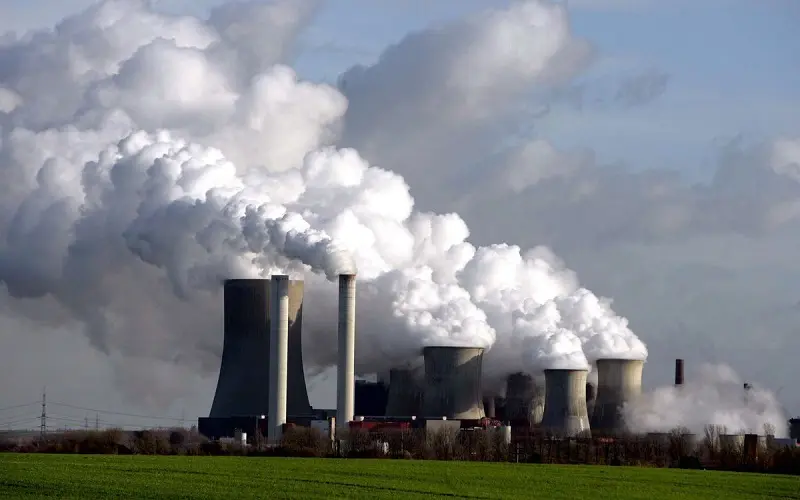
Exhaust gas from coal-fired boilers contains many contaminants
During operation, the coal-fired boiler produces a stream of exhaust gases containing many different components such as ash dust, CO₂, CO, SO, SO, and NOx. These substances arise from the combustion of the fuel and the chemical reaction that occurs at high temperatures in the combustion chamber. In which, the content of SO₂ and NOx gas is usually higher than the allowable level if there is no suitable treatment system. In addition, ash generated from coal also exists in the exhaust gas in the form of small particles, easily dispersed to the environment around the factory.
Effects of ash dust on human health
Dust generated from coal ash is one of the ingredients that easily affect health if not controlled. Small dust particles can penetrate deep into the respiratory system when humans inhale. Dusty particles smaller than 10 m can enter the bronchi and cause respiratory infections. Dust particles smaller than 2.5m have the ability to penetrate deeper into the lungs and accumulate in lung tissues, increasing the risk of respiratory diseases. The elderly, children and people with lung disease are the most vulnerable.
The harmful effects of NOx gas in thermal emissions
NOx gas is formed when nitrogen in the fuel and in the air reacts at high temperature in the combustion chamber. This is a group of toxic gases that can directly affect the respiratory system. When inhaled NOx at low concentrations, the lungs can be irritated and damaged. In cases of high concentrations, NO gas can pose a serious health hazard. Therefore, reducing the amount of NOx generated from thermal power plants is an important requirement in exhaust gas treatment systems.
SO2 gas and impact on the air environment
SO gas arises mainly from sulfur present in coal when combustion occurs. This is a colorless gas with a pungent odor and has the ability to dissolve in water. When dispersed into the atmosphere, SO can be oxidized and converted to SO under the action of chemical reactions in the air. These compounds can irritate the respiratory tract when inhaled by humans and at the same time increase the level of air pollution if not treated before being released into the environment.
2. Common exhaust gas treatment technologies in thermal power plants
To reduce the impact of emissions on the environment, thermal power plants often apply many different treatment technologies to remove dust and harmful gases before the exhaust gas is released into the chimney. These treatment systems are designed to treat different groups of pollutants in the exhaust stream. The three commonly used technologies include electrostatic precipitate (ESP), desulphur (FGD) system and SCR reduction system.
Electrostatic Dust Filter (ESP)
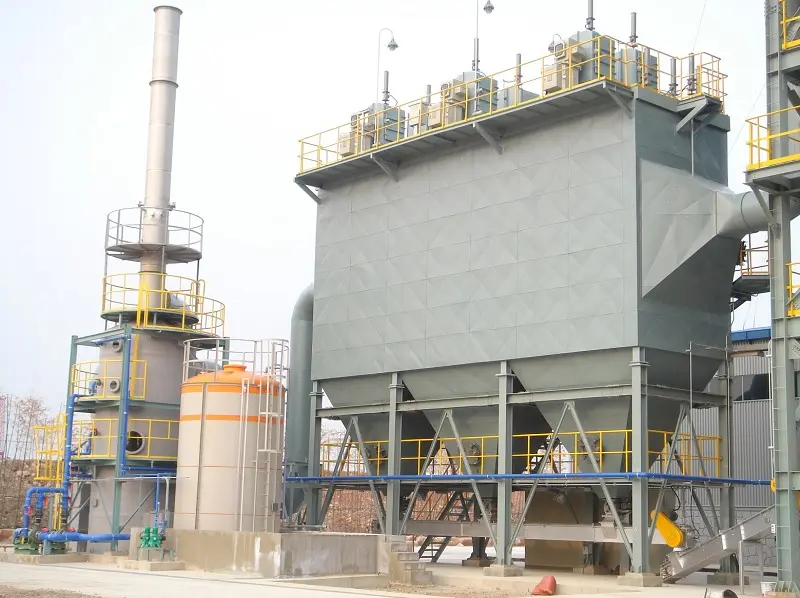
Electrostatic dust filter is a technology widely used in thermal power plants to remove ash dust generated from coal burning process. This system operates on the principle of using an electric field to separate dust particles from the exhaust gas stream. As the exhaust passes through the filter, the dust particles will be charged and drawn towards the terminal plates of the device. The dust is then collected and removed from the gas stream. ESP technology has a very high dust filtration efficiency, which can reach about 99.9%, significantly reducing the amount of dust released into the environment.
Desulfurization system (FGD)
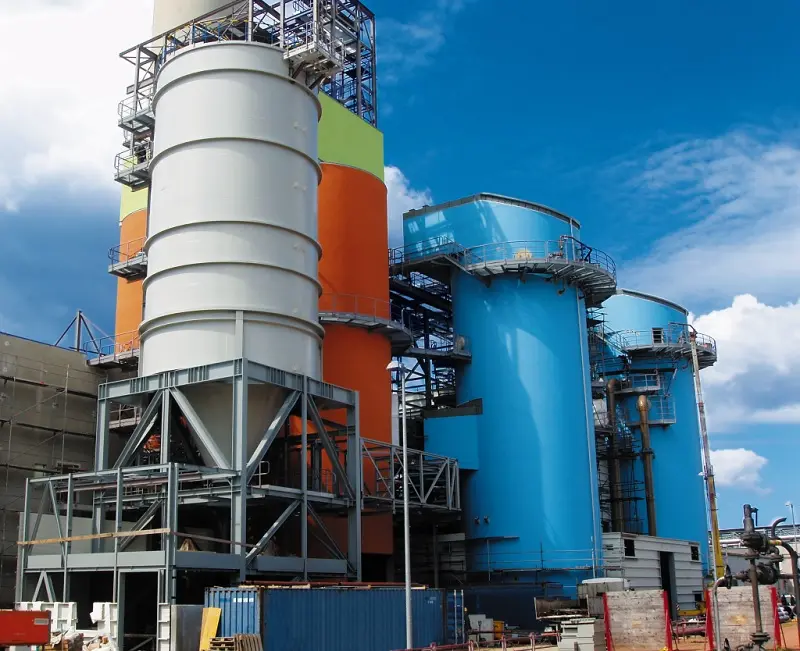
The desulfurization system in the exhaust gas, commonly known as FGD, is used to remove SO₂ arising from the coal burning process. In this system, the most commonly used absorbent solution is Ca(OH) to react with SO₂ gas in the exhaust gas stream. The absorption process usually takes place in the absorption tower, where the gas stream is in contact with the treatment solution. The buffer tower is often selected in many FGD systems because of the large contact area between the gas and the solution. The buffer material is usually a porcelain ring with good heat resistance and corrosion resistance. After the reaction, by-products are often converted to gypsum, easy to collect and process.
NOx reduction system by SCR
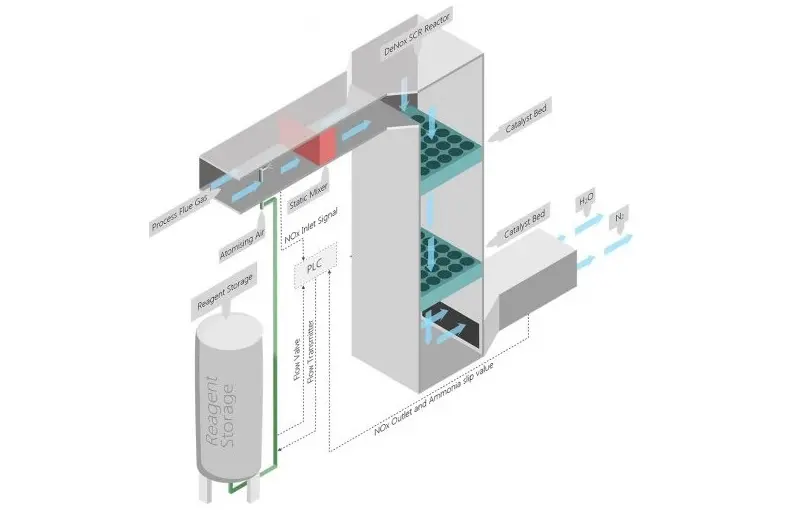
SCR (Selective Catalytic Reduction) technology is used to treat NOx gas in the exhaust gas line of the thermal power plant. In this system, the reducing agent is introduced into the exhaust gas stream to react with NOx under the support of a catalyst. The common catalysts in the SCR system are usually V₂O₅. The operating temperature of the system is usually between 300 and 450°C. In many cases, AdBlue solution is used as an ammonia source for the reduction reaction. When the reaction takes place on the catalyst surface, NOx will be converted into nitrogen and water vapor, two components have little effect on the environment.
3. Efficient Thermal Power Plant Gas Treatment Solution – AdBlue® by Madin
Thermal power plant gas treatment solution Efficiency is often used in Nox reduction systems using SCR technology. In this system, AdBlue solution acts as a source of ammonia to react with nitrogen oxides present in the exhaust gas. When used correctly in the SCR system, this solution converts NOx into nitrogen and water vapor, thereby reducing the amount of harmful gases emitted to the environment.

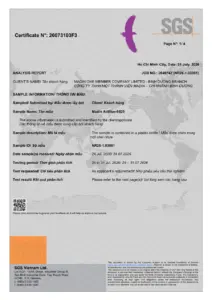
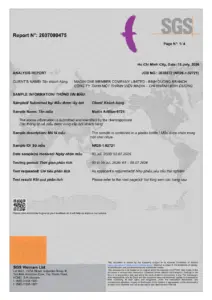
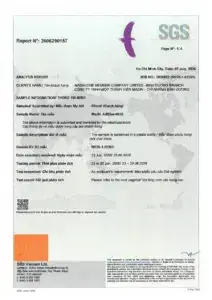
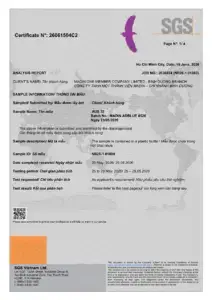
AdBlue® by Madin is an exhaust gas treatment solution produced with 32.5% pure urea and 67.5% deionized water. Products are manufactured according to international standards such as ISO 22241 and DIN70070 to ensure purity and stability when used in the SCR system. With standard ingredients, the solution is capable of reducing from about 85% to 95% of the amount of NOx gas generated from diesel engines or fuel combustion systems.
In addition to meeting quality requirements, AdBlue® by Madin is also manufactured on an automatic line and is tested by the German Automobile Industry Association (VDA). Urea materials used in production are imported from Mitsui Chemical Japan or equivalent sources of international standards. This helps to ensure the solution is highly purified and safe for the exhaust gas treatment system.
Currently, Madin provides AdBlue solution nationwide with a wide distribution system. AdBlue supply stations are located at many gas stations and selling points, making it easy for users to access products when needed. In addition, Madin also provides consulting services to use AdBlue solution, helping businesses choose the right solution for the operating exhaust system.
In addition to providing products, Madin also deploys support services such as cleaning the SCR/DEF system and AdBlue rescue service 24/7. With a wide network of services and supply systems, Madin is becoming one of the suppliers of emissions treatment solutions chosen by many businesses.
Contact information
MADIN COMPANY LIMITED
- Hanoi warehouse: 756B Nguyen Khoai – Thanh Tri – Hoang Mai – Hanoi
- Hotline: 0886634634
- Email: [email protected]
- Factory address: Road 206 Pho Noi A Industrial Park, Van Lam, Hung Yen
Epilogue
The application of appropriate emission treatment solutions helps the thermal power plant to minimize its impact on the environment and meet current emission control standards. When combined with treatment technology such as SCR, exhaust gas treatment solutions can help convert harmful gases into less influential components. Among the solutions used today, Thermal power plant gas treatment solution Efficiency such as AdBlue® by Madin produced by Madin is being interested by many units thanks to its ability to support NOx emissions in the exhaust gas treatment system. Madin provides products that meet quality standards and support services nationwide.