


For diesel vehicles using SCR systems, AdBlue is an essential solution that helps control exhaust emissions and keeps the vehicle running to environmental standards. However, many drivers and vehicle owners wonder whether ordinary water can be used to replace or dilute AdBlue when the solution is running low. This is a widely asked question because it directly affects operating costs, exhaust treatment performance, and vehicle longevity. Read this article from Madin to find the answer to “Can you use water instead of AdBlue?”
1. Can you use water instead of AdBlue?
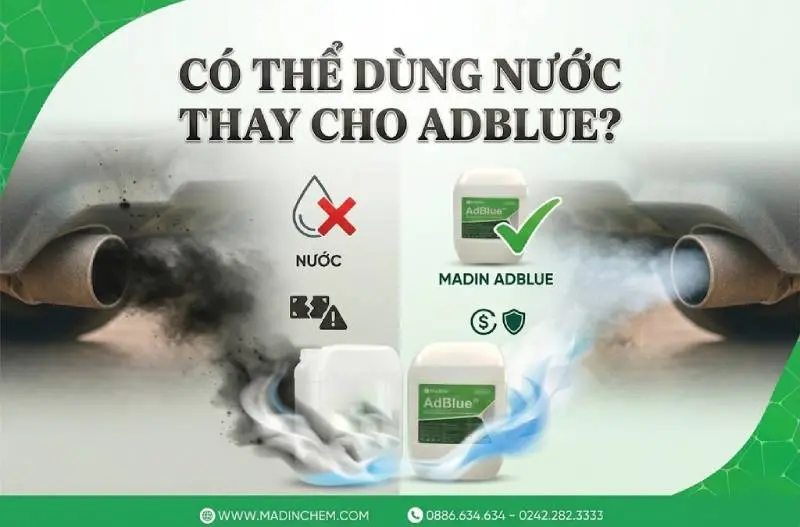
The answer is no — water cannot be used to replace AdBlue, and AdBlue must never be diluted with water in any form. This is one of the most common mistakes drivers make when the tank warning shows the solution is running low, or when trying to save on operating costs.
AdBlue is not ordinary water — it is a solution manufactured to a standard ratio of 32.5% high-purity urea and 67.5% deionized water. This composition is strictly controlled to ensure the SCR exhaust treatment system operates accurately.
Ordinary water, on the other hand, contains minerals, salts, and ions. When introduced into the AdBlue tank, these impurities can degrade solution quality, cause buildup inside the system, and reduce NOx exhaust treatment efficiency.
In addition, the SCR system is designed to recognize AdBlue solution that meets specification. If water is used as a substitute or to dilute the solution, the vehicle may display fault warnings, lose performance, and suffer reduced lifespan of related components.
Therefore, to keep the vehicle running smoothly and the exhaust treatment system working as designed, users should only use genuine, quality-certified AdBlue solution.
2. What happens if you pour water into the AdBlue tank?
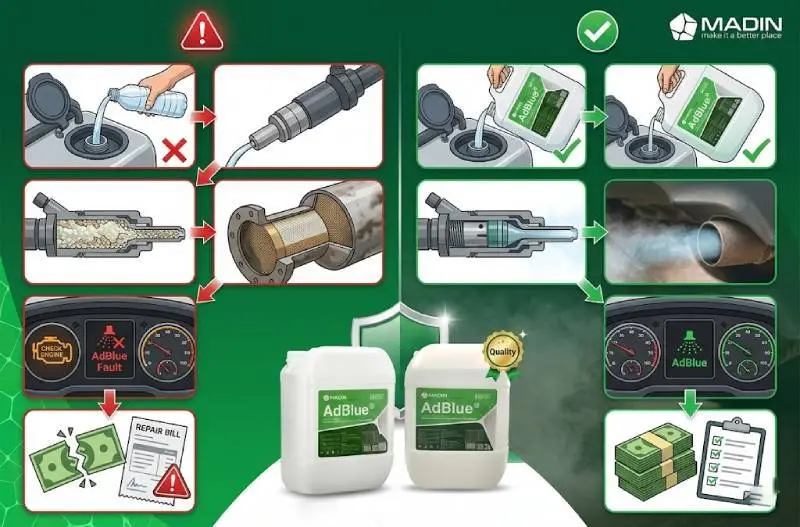
Pouring water into the AdBlue tank may seem harmless, but in reality it can significantly affect the SCR exhaust treatment system. Below are the most common risks:
- The SCR system stops operating as designed: SCR is engineered to use AdBlue with a standard composition and concentration. Once water enters the system, the exhaust treatment process no longer performs as originally designed.
- The vehicle may display SCR fault warnings: Onboard sensors can detect changes in solution quality. When an abnormality is detected, the system triggers a warning requiring inspection and repair.
- Increased risk of crystallization and system clogging: Water containing minerals and ions can form deposits in the piping, injector, or other components of the SCR system.
- Reduced lifespan of the catalyst and NOx sensor: Impurities in water can reduce catalyst efficiency and affect the accuracy of the exhaust sensor.
- The vehicle may go into a power-limited mode: Many modern diesel vehicles automatically activate a protection mode when an SCR fault is detected, resulting in reduced power or limited operation until the issue is resolved.
3. What to do if you accidentally pour water into the AdBlue tank?
If you discover that water has been accidentally poured into the AdBlue tank, you should address it as soon as possible to limit the risk of damage to the SCR system. Continuing to drive in this condition can affect exhaust treatment components and lead to unnecessary repair costs.
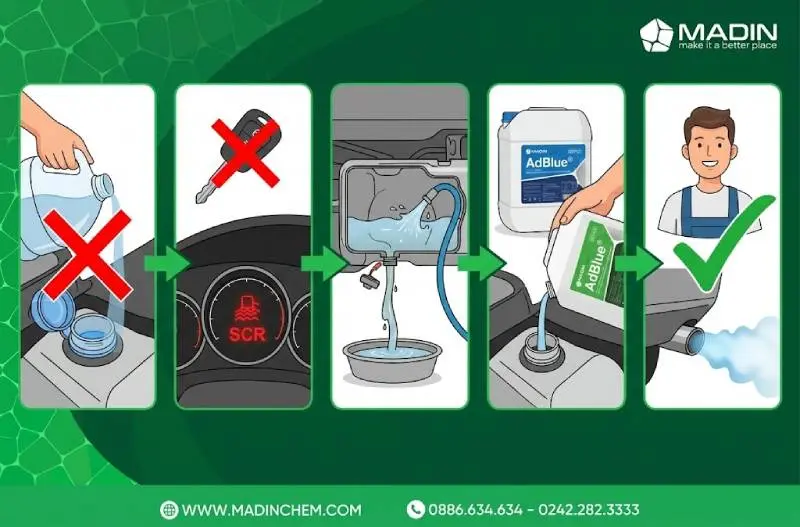
Do not add more water or AdBlue
Once water is detected in the AdBlue tank, do not keep adding more AdBlue hoping to rebalance the concentration. This does not solve the problem, since the solution ratio has already changed and may prevent the system from accurately recognizing the solution’s quality.
Limit driving if caught early
If the mistake is caught right after it happens and the vehicle has not been driven much, it’s best to limit further use. This is the most favorable time to fix the issue, since the water has not yet circulated widely through the system. Continued driving can push the diluted solution further into the piping, injector, and SCR catalyst.
Check how much water was added
The severity depends on how much water entered the system. If it’s only a small amount, correction may be simpler. However, if the tank has been significantly diluted, appropriate technical measures are needed to remove the substandard solution from the system.
Contact a technician experienced with SCR systems
The safest solution is to take the vehicle to a technical center or garage experienced in handling SCR systems. A technician will assess the actual condition, evaluate the extent of the impact, and carry out the steps needed to restore normal system operation.
Do not rely on word-of-mouth fixes
Many people choose remedies such as adding concentrated AdBlue or continuing to use the vehicle until the tank runs dry. This is not a recommended approach, as it can make the problem worse. Handling the issue correctly from the start helps minimize risk and protects key components of the exhaust system.
4. AdBlue® By Madin – Genuine, high-purity AdBlue solution for diesel vehicles
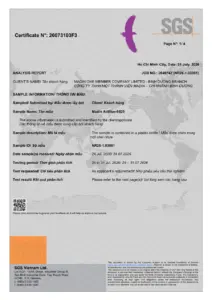
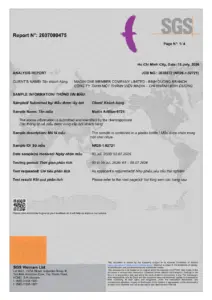
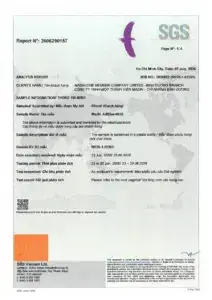
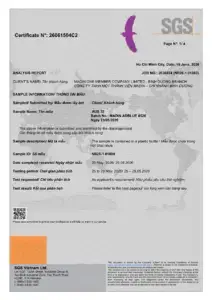
AdBlue® By Madin is a solution developed for diesel vehicles using SCR technology, meeting the demands of stable operation and compliance with current emission standards. The product is manufactured from 32.5% high-purity urea and 67.5% deionized water, ensuring the purity required for the exhaust treatment system.
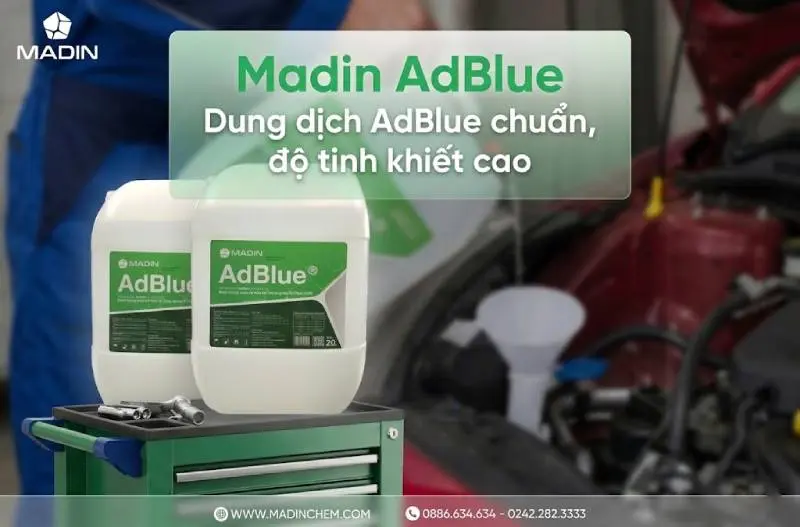
Meeting the German VDA quality standard, AdBlue® By Madin is suitable for a wide range of vehicles including trucks, tractor-trailers, buses, passenger cars, and diesel SUVs using SCR. The product helps reduce NOx emissions, supporting vehicles in meeting Euro 4, Euro 5, and Euro 6 standards.
Beyond exhaust treatment efficiency, AdBlue® By Madin also helps reduce the risk of crystallization in the system, protecting injectors, catalysts, and related sensors. This helps maintain SCR system stability and minimizes technical faults during operation.
Madin offers a wide range of packaging, from 10L and 20L jerry cans to 200L drums, 1000L tanks, and large-capacity dispenser systems, meeting the needs of individuals through to transport businesses. This makes it a suitable choice for organizations that need a reliable, standard-compliant AdBlue supply for long-term use across their diesel fleet.
Conclusion
The information above has answered the question “Can you use water instead of AdBlue?”. Using the correct, quality-certified AdBlue solution not only keeps the exhaust treatment system working efficiently but also reduces technical failures and unnecessary repair costs. For quality and stability during operation, users should choose certified AdBlue such as AdBlue® By Madin. If you need advice on the product, how to use it, or the right solution for your vehicle, please contact Madin for detailed support.
CÔNG TY TNHH MTV MADIN
- Address: 13 Le Ngung Street, Tran Hung Dao Ward, Quang Ngai City, Quang Ngai Province, Vietnam.
- Hotline: +84 888 718 778
Factories:
Northern Vietnam
- Address: Road 206, Pho Noi A Industrial Park (Thanh Ha Warehouse), Lac Hong Commune, Van Lam District, Hung Yen Province, Vietnam.
- Hotline: +84 857 529 222
Southern Vietnam
- Address: 180 Thong Nhat Street, Binh Thang Ward, Di An City, Binh Duong Province, Vietnam
- Hotline: +84 888 718 778
Warehouses:
- Hanoi: 706 Nguyen Khoai Street, Thanh Tri, Hoang Mai, Hanoi
- Nghe An: Dien Hong Industrial Park, Dien Chau, Nghe An
- Da Nang: 303 Le Dai Hanh Street, Hoa Phat, Cam Le, Da Nang
- Quang Ngai: 13 Le Ngung Street, Tran Hung Dao Ward, Quang Ngai City, Quang Ngai Province