


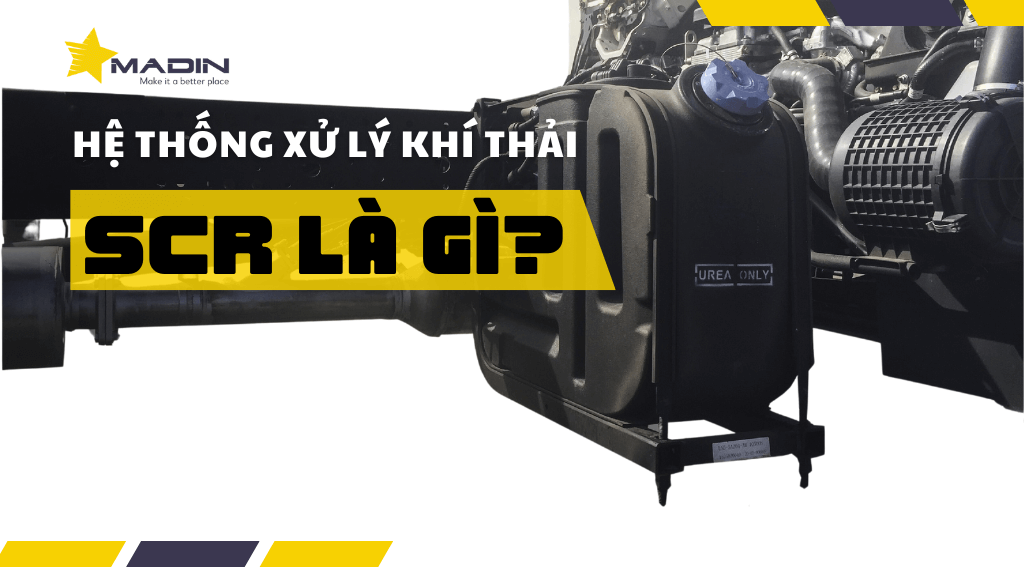
The SCR emission treatment system is also known in English as A Selective Catalytic Reduction (SCR), this system is an advanced technology with active emission control used in diesel engines.
See more: AdBlue emission treatment solution
Learn more about SCR
As mentioned above, the SCR (Selective Catalytic Reduction) is an advanced active emission control technology system that works by introducing liquid reducing agents through a special catalyst into the exhaust gas stream of diesel engines..
The source of waste reduction is usually car-grade urea, also known as diesel discharge liquid (DEF)/ADBLUE. AdBlue’s solution performs a chemical reaction that converts nitrogen oxide to nitrogen, water and a small amount of carbon dioxide (CO2) are the natural components of air harmless to the environment and people, then discharged through the exhaust of the vehicle.
SCR technology is designed to allow denitrification reactions (NOx) to take place in the oxidizing environment, also known as “selective”. This reaction will reduce the NOx level by using ammonia as a reducing agent in the catalyst system. The chemical reaction is called “reducing” where DEF/AdBlue is a reducing agent that reacts with NOx to convert pollutants into nitrogen, water and small amounts of CO2. AdBlue solution can be quickly broken down to create oxidized ammonia in the exhaust stream. SCR technology alone can reduce Nox by up to 90%.
Main components of the SCR system:
1/ SCR catalyst
2/ AdBlue® Liquid Nozzle Parts
3/ AdBlue® container
4/ AdBlue® Injection Controller.
Working principle of SCR system
The SCR (Selective Catalytic Reduction) system works by converting the nitrogen oxides (NOx) in the exhaust gas to water vapor and nitrogen, through a catalytic converter. This process is carried out by continuously injecting the reducing agent into the exhaust stream through the metering module. The reducing agent, usually AdBlue’s solution, quickly reacts to produce ammonia (NH3) in the exhaust gas stream. Ammonia then converts NOx to nitrogen and water in SCR catalytic converter.
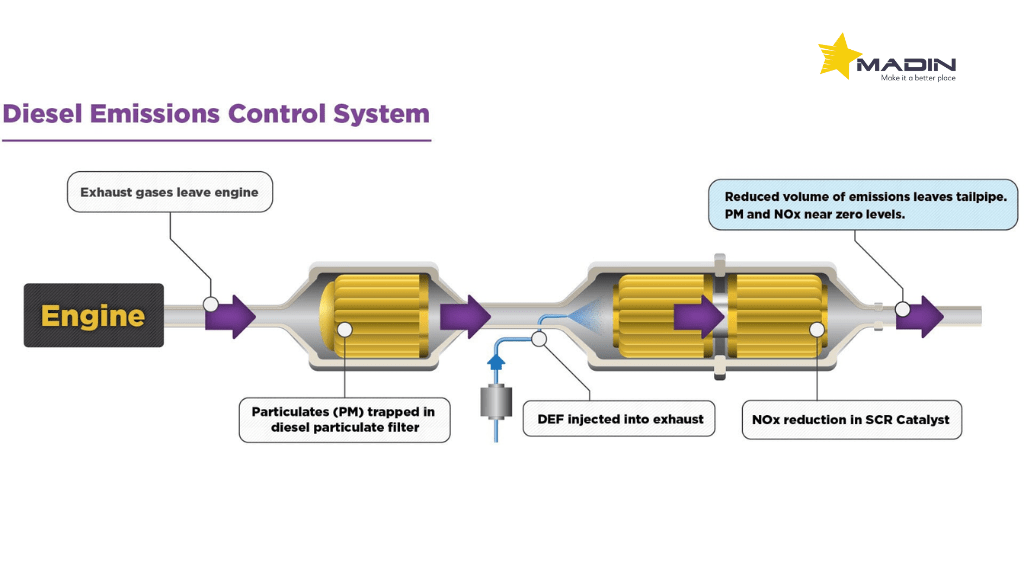
The SCR exhaust gas treatment system minimizes the amount of NOx in the exhaust gas by injecting aqueous-urea/adblue solution into the pre-catalyzed SCR catalytic converter, producing nitrogen and water during selective catalytic reduction..
This reducing agent, non-toxic and odorless, has been widely used in commercial vehicles and has been present in Europe since 2004 and the United States since 2010. In Europe, this substance is known as the trade name “Adblue”, including the solution. 32.5% pure urea and 67.5% deionized water. The amount of reducing agent used accounts for about 5 to 7% of fuel consumption.
The reducing agent is stored in a separate container and pumped through the pipes to the meter to ensure the NOx conversion rate is higher in many cases. The electronic control system will accurately calculate the amount of reducing agent required based on the main parameters of the engine such as operating temperature and engine speed, ensuring the optimal performance of the propulsion system.
What is the importance of the SCR emissions treatment system?
SCR technology was born to solve the problem of diesel engine emissions outside the environment, not only that, but also has the ability to help save fuel and efficiency. In Vietnam, trucks, containers, diesel passenger cars Produced after January 1, 2010 must meet the latest EPA emission standards, one of the most stringent standards in the world, reducing particle-formal matter (PM) and nitrogen oxide (NOx) to near zero.
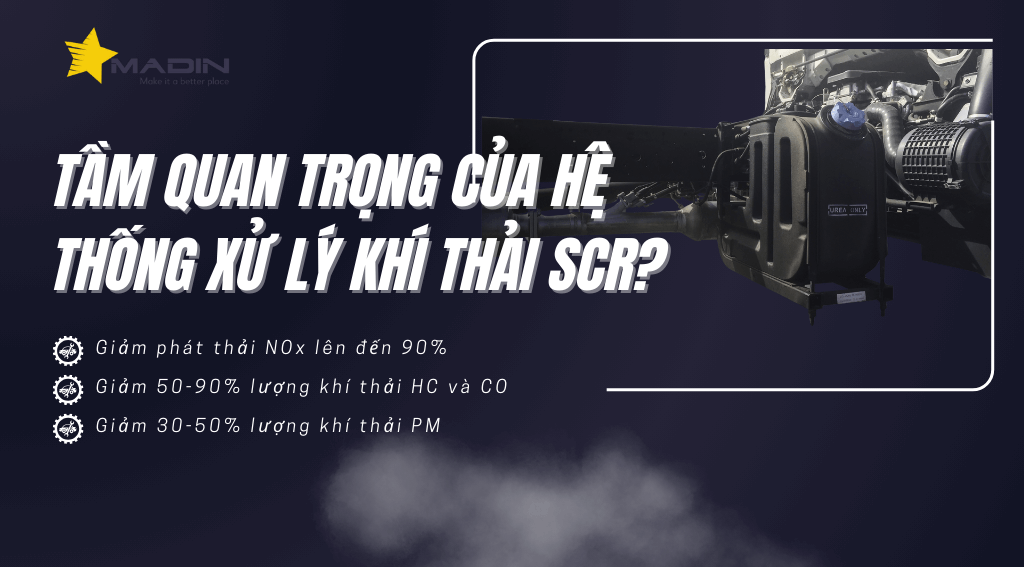
Thanks to advanced technology SCR:
- NOx emission reduction up to 90%
- 50-90% reduction of HC and CO emissions
- 30-50% PM emissions.
- SCR system combined with diesel engine particle filter to achieve large emission reduction for fine dust PM.
In the road transport industry, some truck operators equipped with SCR are reporting fuel economy gains of 3-4%. In addition, terrain equipment, including construction and agricultural equipment, must meet the EPA’s of grade 4 emissions standards that require a reduction of NOx, PM and other similar pollutants. SCR is a technology that can help terrain equipment meet these strict emission standards.
What is the future of SCR technology?
Selective catalytic reduction technology (SCR) is aiming for an important future in reducing vehicle emissions. The U.S. Environmental Protection Agency (EPA) has proposed a “cleaner truck initiative” with the goal of developing stricter exhaust emission standards, moving toward emissions near zero.
Improvements and upgrades to the SCR system will be a core part of achieving this goal. Optimizing compact design and SCR system layout integrated into commercial vehicles will play an important role in reducing emissions. SCR technology not only improves emissions conversion efficiency but also supports easy integration into commercial vehicle designs, ensuring high efficiency in all operating conditions.
Thanks to these efforts, SCR technology will continue to develop, contributing to environmental protection and meeting increasingly strict emission standards in the future.
Hotline: +84 886 634 634