


Fuel systems and engine oil often produce dirt, which affects vehicle performance. But which type is harder to clean? Let’s find out with Madin right away!
1. Fuel residue – fast formation, easy to clean
Fuel residue occurs when unburned hydrocarbons adhere to the engine surface. Under high temperatures, they burn and become harder over time. The more fuel that does not burn out, the more residue accumulates. However, fuel residue is still easier to clean than engine oil residue.
Interesting examples: Do you prefer to wipe dry sweet tea or burnt molasses on the terrace? Fuel residue is like sweet tea, and oil residue is like molasses!
2. Engine oil residue – harder to remove
Engine oil residue is difficult to clean because the oil is highly viscous, even in the form of small droplets. They form in the fuel air intake system in layers, accumulating over time.
Formation process:
- When the engine is running, the crankcase vent system (PCV) injects oil vapors into the air intake line.
- When encountered at lower temperatures, the oil condenses into small droplets and adheres to each other.
- In gaseous form, oil droplets have a large contact area, which is easier to stick to when in liquid form.
- Thick oil residue creates a durable matrix layer that is difficult to clean.
3. The problem of fouls in modern engines
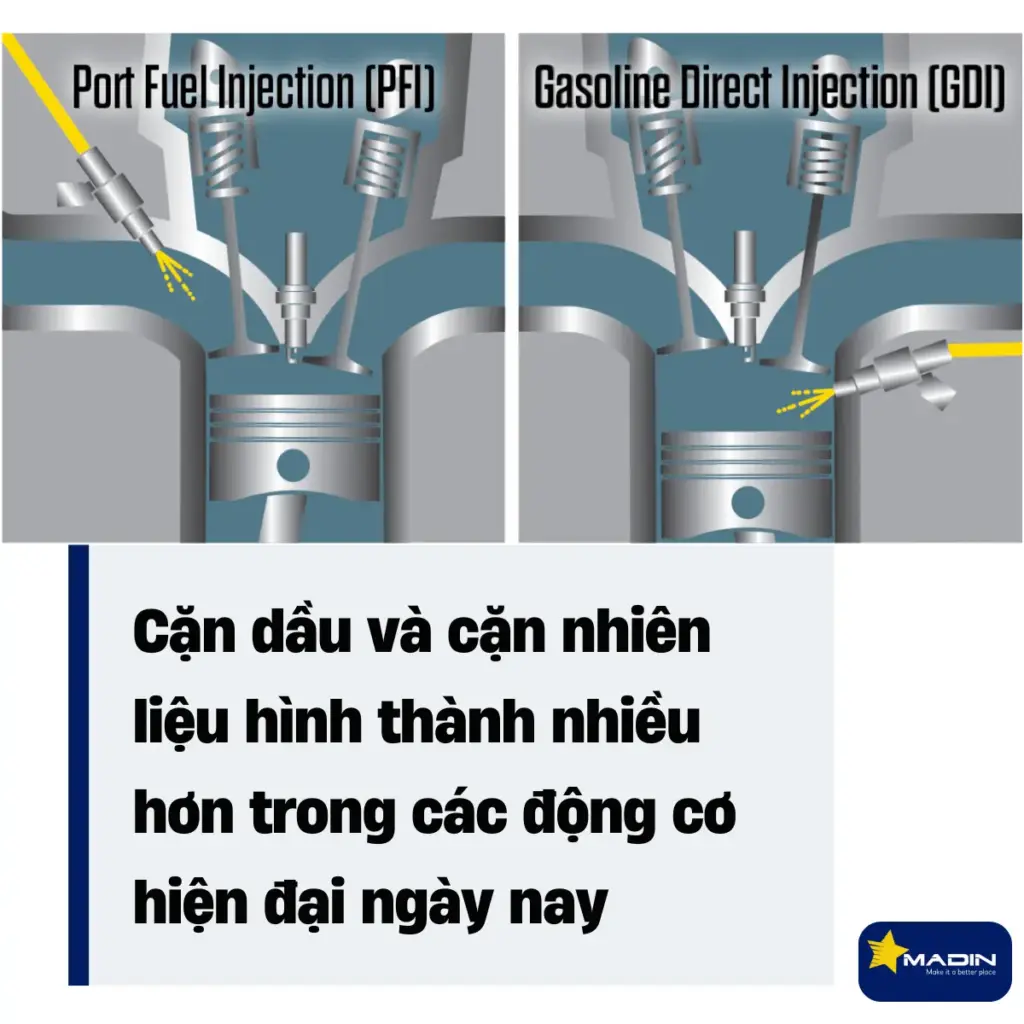
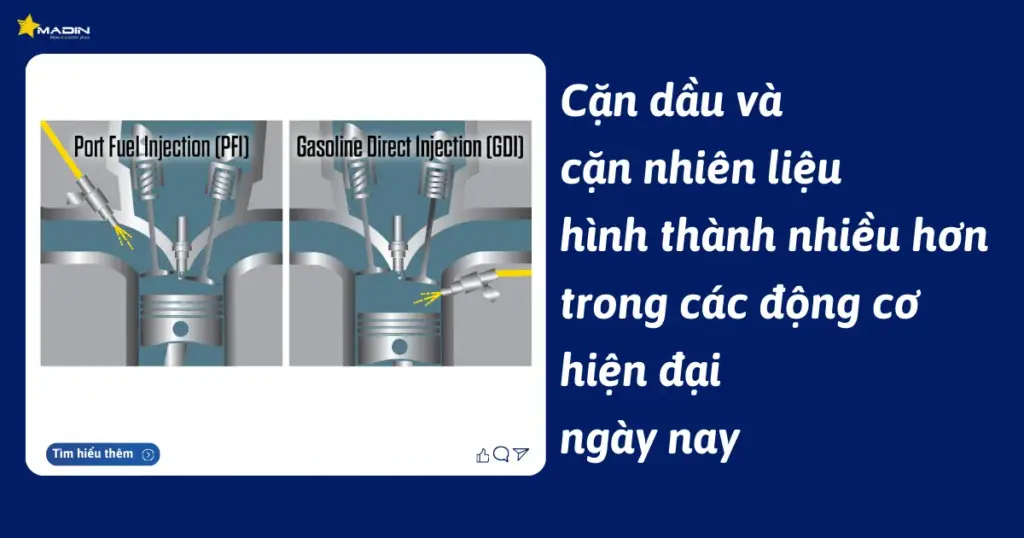
Older cars mainly use the system Fuel injection into port (PFI), which helps clean the fuel jet intake valve every time the engine runs. However, modern vehicles often use Direct fuel injection (GDI), injecting fuel directly into the combustion chamber instead of into the intake port. This system increases efficiency and reduces emissions but is more likely to cause oil deposits to accumulate.
Causes:
– The PCV system puts oil vapor from the crankcase into the air intake line, adhering to the intake valve.
– Poorly functioning pistons and glove rings cause oil vapors to leak into the combustion chamber.
– When the intake and relief valves open at the same time (during valve duplication), oil vapors are sucked back up the intake line.
What are the consequences? Hard oil deposits such as burnt molasses, adhere tightly to the air intake line and intake valves, causing a decrease in engine performance.
Have you noticed that your car is sluggish or consuming more fuel? It’s time to check and clean the engine!
Source: Dustin Willhite – Chief Product Technology Officer at BG Products, Inc. https://www.bgprod.com/blog/engine-cleaning-oil-based-vs-fuel-based-deposits/